There’s Higher Risk of Accident If Your Car is THIS Colour
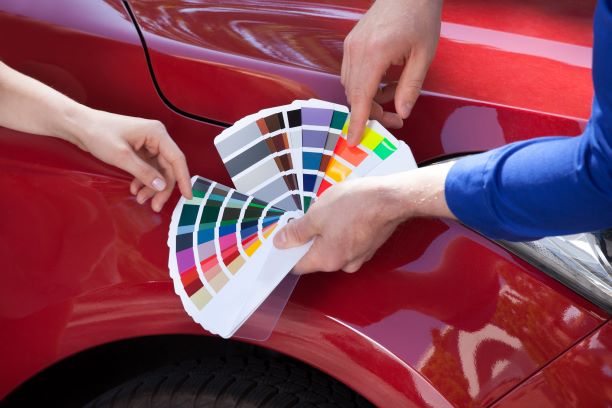
Recently, this writer’s friend swore she would never drive a black car again because she “kept getting hit by other cars” on the road. Is there really a connection between car colour and safety? The statistics, in fact, agree with her.
Studies by automotive companies, insurance firms and educational institutions (such as this and this) have found that differently coloured cars got into different frequency of accidents. Whether during the day or night, cars that are black, (darker shades of) silver or grey are more likely to get into an accident. The safer car colours are white and yellow.
The simplest explanation is that light-coloured cars are easily seen. This applies not just at night, but in the day when they have higher contrast with the road. The better other drivers can see you, the easier they can avoid you and the earlier they can hit the brakes. The opposite is true for dark-coloured cars.


Another reason could be the forward and backward characteristics of colours. “Forward colours”, such as yellow, red and other warm colours, appear nearer to you whereas “backward colours”, such as blue and green, appear farther. Drivers tend to be more careful when they perceive another car is nearer to them.
Yet another possible factor is the “swelling” and “shrinking” characteristic of colours. Some colours, ie. white, make a vehicle look bigger while others, ie. black, make it look smaller. Many small-car drivers would swear that they are discriminated against on the road.
Still, that is not to say that we should all buy light-coloured cars only; there are numerous other factors that come into play to ensure safe driving, such as your driving abilities, the condition of your car, weather conditions and more. Choose the car colour of your dreams and practise your defensive driving techniques to mitigate the risk, and you’ll be alright.