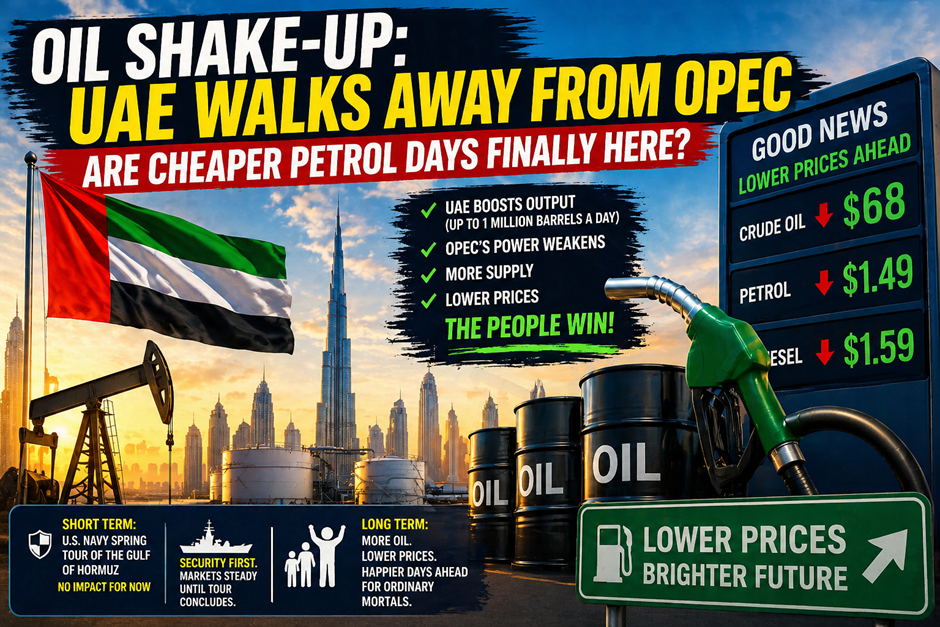
OIL SHAKE-UP: UAE WALKS AWAY FROM OPEC: ARE CHEAPER PETROL DAYS FINALLY COMING?
There’s a quiet tremor running through global energy markets, and if you drive a car, it might just be the kind of disruption you’ve been waiting for.
For decades, OPEC has operated as the ultimate gatekeeper of oil supply. Since its formation in the 1960s, the cartel has carefully managed output among member nations, ensuring oil remained just scarce enough to keep prices comfortably high. That strategy, while lucrative for producers, has often translated into higher fuel costs for ordinary people, drivers, commuters, families, truckers, shippers, business owners…. In fact everyone feeling the pinch at the pump.
Now, the United Arab Emirates appears to be stepping away from that tightly controlled system. And that changes the game.
Let’s not get ahead of ourselves, there’s a short-term caveat. As long as the United States Navy continues its spring tour of the Gulf of Hormuz, a critical artery for global oil transport, markets are likely to remain steady. Security concerns tend to override supply shifts, meaning prices won’t immediately tumble. For now, the status quo holds.
But beyond that? The outlook gets interesting.
Freed from OPEC’s production quotas, the UAE has the capacity to increase output by up to one million barrels per day. That’s not a trivial bump, it’s a surge. More oil flowing into global markets typically leads to increased competition and downward pressure on prices. And with one of OPEC’s key players stepping back, the cartel’s grip begins to loosen.
This could trigger a broader shift. Other nations may reconsider their commitments, further weakening coordinated supply controls. For consumers, that means something simple but powerful: relief.
Lower crude oil prices generally translate into cheaper petrol. And cheaper petrol means more disposable income, less stress at the checkout, and fewer tough choices between essentials.
It’s early days, but the trajectory is promising. After years of tight supply and inflated costs, the balance may finally be tipping back toward the everyday consumer.
And if that million-barrel boost materializes?
Happy days ahead at the petrol pumps for ordinary mortals.