Hybrid Cars Still Need Engine Care: The Hidden Performance Issues Most Owners Never Hear About
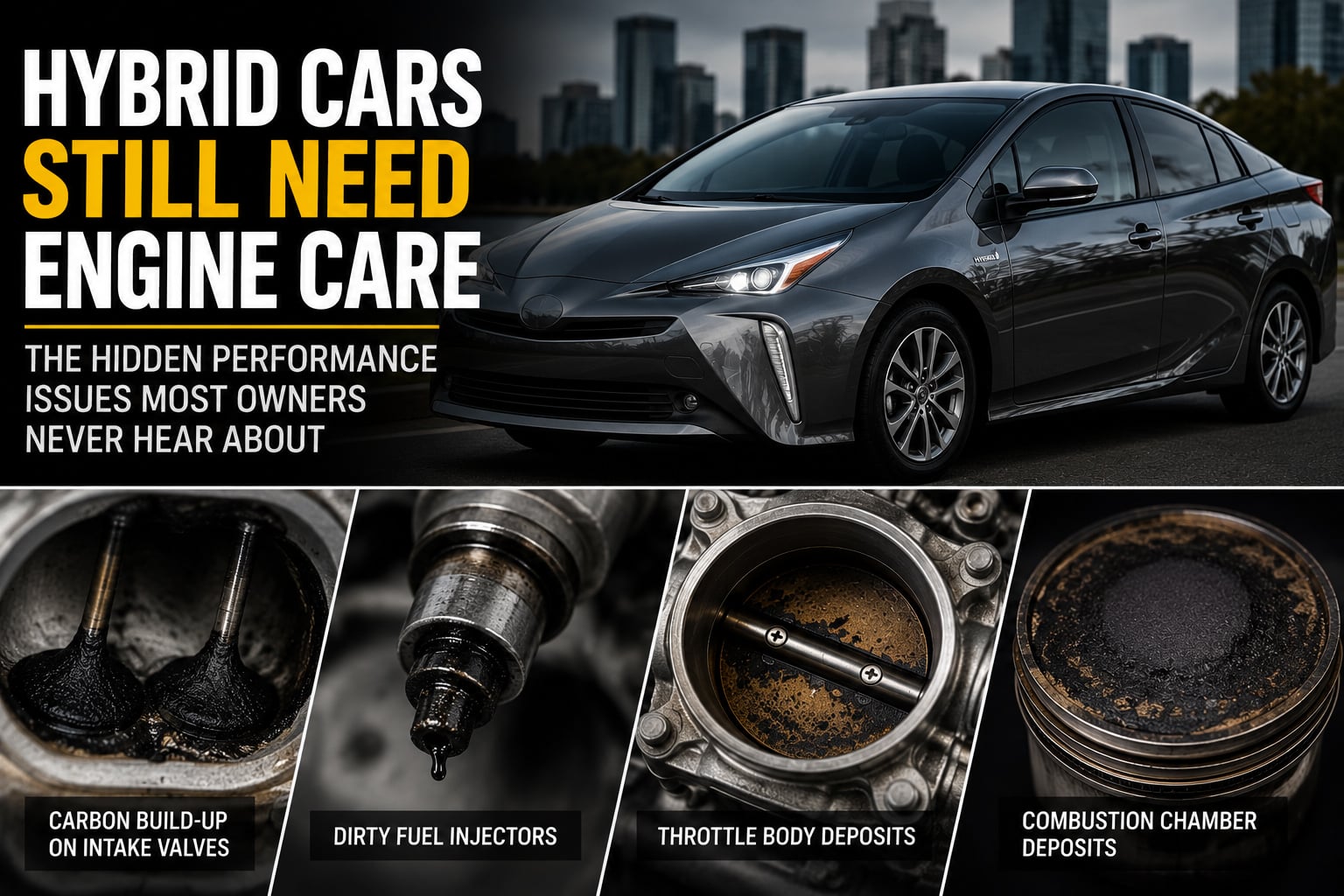
Hybrid vehicles have earned a reputation for outstanding fuel economy, lower emissions and impressive reliability. However, one common misconception persists among many owners: because a hybrid spends part of its journey on electric power, the petrol engine requires less maintenance. In reality, the opposite may be true in certain operating conditions.
Unlike a conventional petrol vehicle, a hybrid engine repeatedly starts and stops during normal driving. Whether it’s crawling through city traffic or switching between electric (EV) mode and petrol power, the engine may restart dozens of times in a single journey. According to the Society of Automotive Engineers (SAE), these frequent engine restart events present unique engineering challenges, particularly during cold-start operation when engine wear and emissions are at their highest.
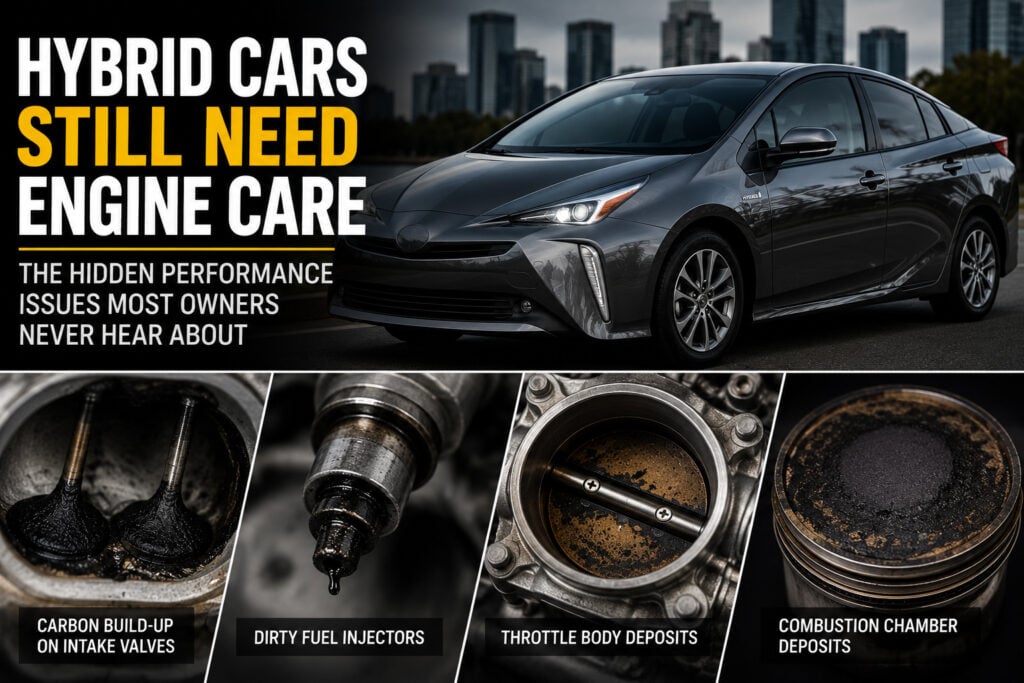
Another lesser-known issue is carbon deposit formation. Hybrid engines often spend more time operating below optimum temperature because the engine shuts down whenever electric propulsion is sufficient. While this strategy improves fuel economy, it can also contribute to carbon deposits forming on fuel injectors, intake valves (especially in Gasoline Direct Injection engines), combustion chambers and EGR components. Excessive deposits may eventually reduce fuel efficiency, cause rough idling, sluggish acceleration and increased emissions. Research published by ScienceDirect highlights carbon deposit formation as an important consideration in modern gasoline engines, particularly those equipped with direct injection technology.
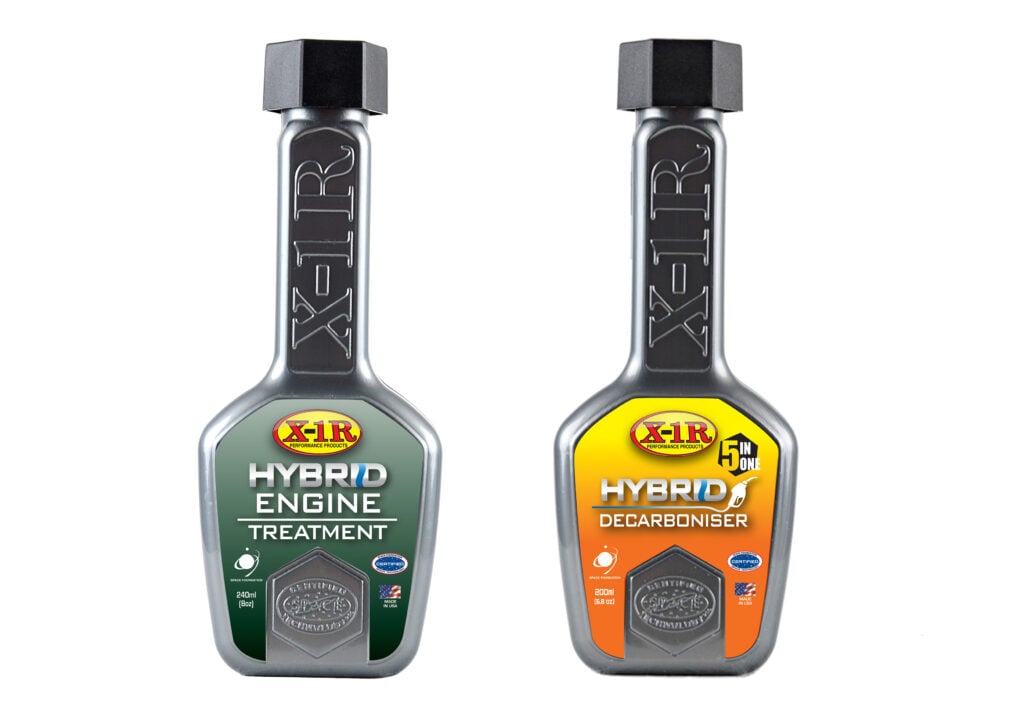
These unique operating characteristics explain why hybrid vehicles benefit from maintenance solutions designed specifically for hybrid engines rather than conventional petrol vehicles alone. Recognising these differences, X-1R developed the X-1R Hybrid Engine Treatment and X-1R Hybrid Decarboniser, two products specifically engineered with modern hybrid petrol engines in mind. Instead of simply adapting existing formulations, these products are designed to support the demands created by frequent engine start-stop cycles, intermittent engine operation and prolonged EV driving, where maintaining fuel system cleanliness and consistent engine lubrication becomes increasingly important.
The X-1R Hybrid Decarboniser is formulated to help keep the fuel system clean, reduce harmful carbon deposits and maintain injector efficiency, supporting smooth transitions between electric and petrol operation. Complementing this, the X-1R Hybrid Engine Treatment is engineered to enhance engine lubrication and reduce friction during the repeated restart cycles that are characteristic of hybrid driving. Together, they provide a maintenance approach tailored to the way hybrid engines actually operate, rather than treating them as conventional petrol engines.
Adding further confidence is the technology behind these products. Both are developed using NASA Certified Space Technology, reflecting X-1R’s long-standing commitment to advanced lubrication and engine protection technologies. While these products are intended to complement—not replace—scheduled vehicle servicing, they are specifically engineered to address the unique operating conditions experienced by modern hybrid vehicles.
Despite these maintenance considerations, hybrid vehicles remain among the most reliable vehicle types on the road. Consumer Reports consistently ranks conventional hybrids (HEVs) above many petrol vehicles and plug-in hybrids (PHEVs) for reliability.
Understanding how a hybrid engine operates is the first step towards preserving its performance. With maintenance products specifically engineered for hybrid technology, owners can better protect engine components, maintain fuel efficiency and enjoy the refined driving experience that makes hybrid vehicles so appealing.