There was a time when Nissan wore its engineering confidence like a well-cut suit. From the indestructible Patrol to the everyman brilliance of the Sunny, and later the swagger of the GT-R, this was a company that knew exactly who it was. Today, Nissan feels more like a giant staring into a cracked mirror recognisable, but deeply uncertain about what it sees looking back.
The problems are not new, merely unresolved. Years of cost-cutting masquerading as strategy hollowed out product identity. The Renault alliance, once hailed as salvation, slowly became a bureaucratic fog where decisive product leadership went to die. Add the Carlos Ghosn saga part Shakespearean tragedy, part corporate soap opera and Nissan has spent the better part of a decade distracted while rivals sprinted ahead.
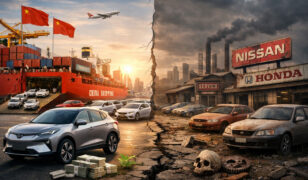
The market has not been kind. Chinese manufacturers are exporting cars at prices Nissan simply cannot match. Korean brands have outflanked them on value and perceived quality. Even Toyota, the conservative old master, has managed to look sharper, faster, and more relevant. Nissan, meanwhile, has survived largely on fleet sales, incentives, and nostalgia never a good long-term plan.
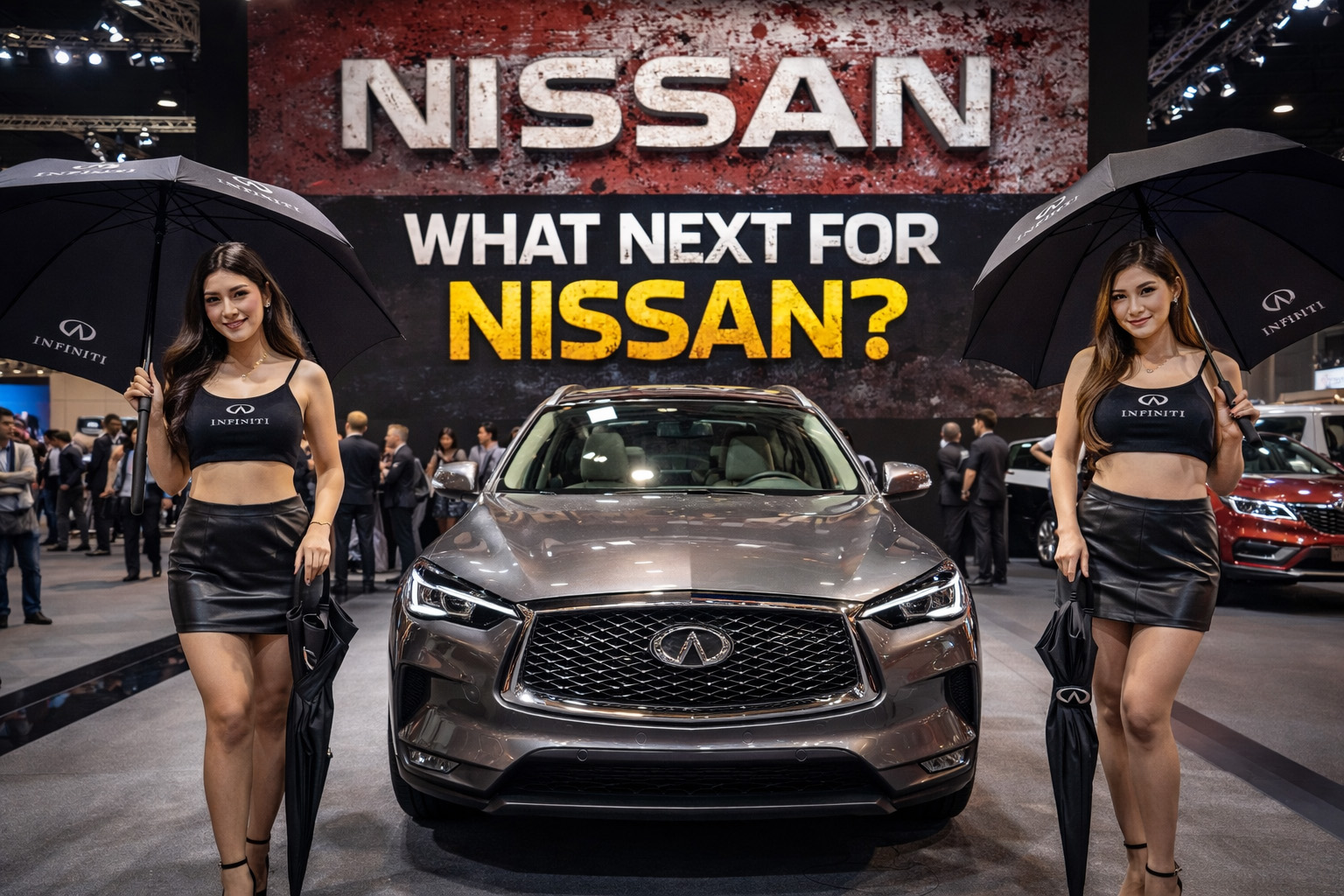
Which brings us to Infiniti, the luxury lifeboat that was supposed to save the ship. In theory, Infiniti should have been Nissan’s Lexus moment: a clean break into premium profitability. In practice, it became a brand without conviction too expensive to be mainstream, too inconsistent to be truly premium. Product cycles dragged on, naming conventions confused, and markets were entered, exited, and re-entered with the confidence of a man unsure which door leads outside.
Can Infiniti save Nissan now? The honest answer, in the McKenzie tradition, is a sharp intake of breath followed by scepticism. Luxury brands don’t rescue mass manufacturers unless they are ruthlessly focused, technologically superior, and emotionally compelling. Infiniti, at present, is none of the three though it could be, if Nissan is willing to make hard decisions rather than polite ones.
What comes next is existential. Nissan must decide whether it wants to be a volume survivor or a technological leader. Electric vehicles offer a second chance the Leaf proved Nissan once understood the future before most but that advantage has been squandered. Reclaiming relevance will require fewer models, clearer identity, and the courage to walk away from unprofitable markets.
The tragedy of Nissan is not that it failed, but that it forgot who it was. Whether Infiniti becomes salvation or merely a footnote will depend on whether Nissan finally chooses clarity over comfort. History suggests the clock is already ticking.