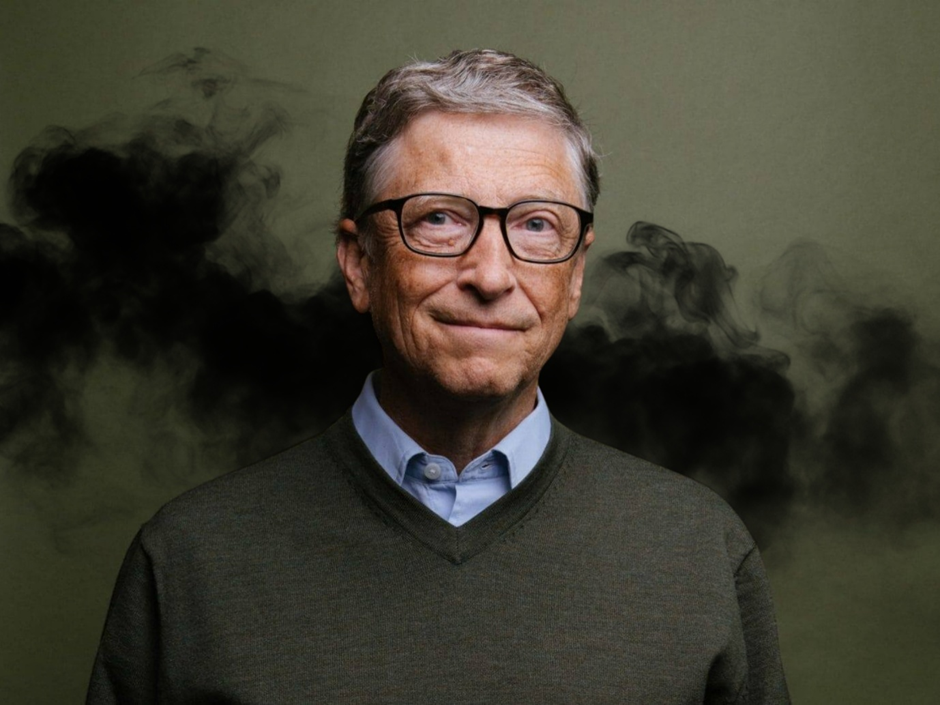
Some of us have been trying to tell y’all that there is no such thing as a stable global climate. Geology tells us that there are frequent hot-spells interspaced with arctic conditions. Now, a recent essay by none-other than the globally famous Bill Gates on the whole “net-zero will save us all” circus, in which he seems to pivot away from the Hemp Trouser wearing Eco-Zealots, will have those seeking the moral high-ground twitching into their Kool-Aid.
In a lengthy blog memo, Gates essentially said: yes, climate change is real, serious, and particularly hard on poor countries, but no, it’s not going to bring an end to human civilisation. “People will be able to live and thrive in most places on Earth for the foreseeable future,” he writes.
Pause. Did you catch that? After decades of global doom-and-gloom about rising seas, zombie polar bears and “irreversible tipping points,” one of the biggest names in tech/philanthropy is saying: the sky isn’t falling. The problem is real, but not of man’s making and certainly NOT existential. Gates argues that the climate community has become obsessed with emissions targets and temperature graphs, while neglecting the real world: disease, poverty, infrastructure, energy access.
Enter Donald Trump. He didn’t waste his moment. Riding Gates’s nuance-laden shift, Trump burst onto his platform to declare: “I (WE!) just won the War on the Climate Change Hoax. Bill Gates has finally admitted he was completely WRONG on the issue.” Cue the triumphant back-slaps.
Now let’s be blunt: this whole “net-zero lunacy” crowd that has driven many European economies into lavish, self-flagellating energy policy fits is begging for critique. Subsidies to windmills, bans on internal combustion, immense costs passed onto consumers and taxpayers. And for what? A moral high ground built on shaky foundations. Meanwhile, communities buckle under energy poverty and manufacturing flight.
Gates’s repositioning is a smack-in-the-face to those who exalt temperature graphs like holy tablets and pretend civilisation hinges on burnt fossil-fuel witches. He says: innovation matters more than virtue signalling. That when you pick between eradicating malaria or trimming a fraction of a degree, you choose the life-saving investment.
Of course, the alarm-masters howl: “But you’re undermining urgency!” Yes, perhaps. But ask yourself: what’s the point of bankrupting your own country chasing unrealistic targets while the biggest threats to poor folks remain malnutrition, disease and failing energy grids? Gates is asking that question. Perhaps we should too.
In short: Gates’s re-calibration is a moment for the skeptical observer. It doesn’t mean that we shouldn’t be responsible about emissions and pollution but it does indict the fanaticism of the net-zero fanatics, those who act as if we can simply flick a switch and flee greenhouse doom while ignoring the human cost of doing so. The end result? Possibly a wiser policy. Or perhaps another headline for the wonks to argue over at the next summit.