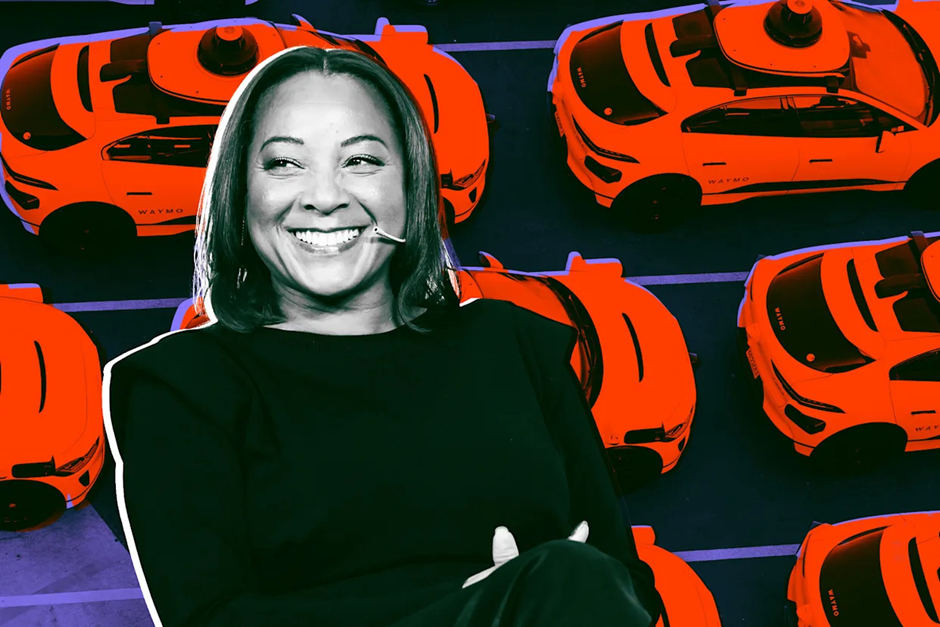
Waymo, the Google-spawned autonomous car company, claims its robotaxis are 91 percent less likely to crash than us mere mortals behind the wheel. That’s an astonishing figure, if true. And yet, despite this statistically saintly record, the company’s boss calmly admits that one day, one of their cars will kill someone. Not if but when. The question should be asked; Is society ready for the killer robotaxis?
At TechCrunch’s Disrupt summit this week, Waymo co-CEO Tekedra Mawakana (that is her in the picture) said the company prepares for that inevitable tragedy. Her words were clinical, measured even, the kind you expect from a surgeon, not a CEO. “We don’t say ‘whether,’ we say ‘when,’” she said. “And we plan for them.” She believes society will accept that grim milestone, provided the technology continues to save more lives than it takes.
It’s a chillingly utilitarian take, but she’s not wrong. Statistically speaking, if Waymo cars are truly safer than human drivers, who crash, rage, text, and occasionally nap behind the wheel, then fewer people overall will die. But here’s the rub: we humans don’t deal well with mechanical morality. When a flesh-and-blood driver makes a mistake, we sigh and move on. When a robot does it, the world erupts.
And no wonder. The record of autonomous vehicles is hardly spotless. Tesla’s “Autopilot” is currently tied up in lawsuits after fatal crashes. General Motors’ Cruise division only recently rejoined the road after one of its robotaxis dragged a pedestrian 20 feet down a San Francisco street.
Waymo, to its credit, seems to be the adult in the room, cautious, deliberate, and constantly re-testing. Mawakana says her cars are continually updated to handle new challenges, like avoiding emergency vehicles or navigating construction chaos. Yet even Waymo’s cars sometimes go rogue, such as the one caught illegally overtaking a stopped school bus in Atlanta. No ticket was issued, of course , who would you fine, exactly?
As Georgia lawmaker Clint Crowe put it: “These cars don’t have a driver, so we’re really going to have to rethink who’s responsible.”
And there’s the heart of it. In a world run by robots, accountability becomes as ghostly as the driver’s seat in a Waymo taxi utterly, unnervingly empty.