Porsche’s EV Reality Check: Billions Lost as Customers Reject the Electric Dream
For much of the past decade, Porsche was held up as proof that the automotive industry’s electric future was inevitable. Politicians loved it, environmental campaigners applauded it, and company executives spoke confidently about a world where battery-powered Porsches would dominate the roads.
Today, that vision is looking increasingly expensive.
The German sports car manufacturer has announced a major rationalisation of its product range, reducing model complexity and focusing on its most profitable vehicles after suffering one of the most dramatic profit collapses in modern automotive history. The move comes as Porsche retreats from an aggressive electric vehicle strategy that has failed to deliver the returns management expected.
The numbers are staggering.
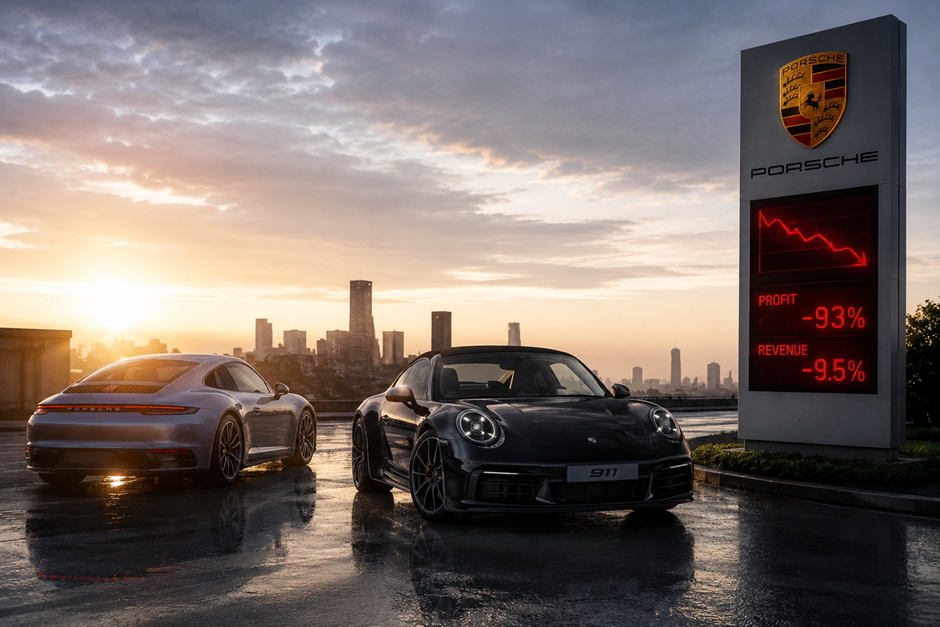
Porsche’s group revenue fell by 9.5% in 2025 to €36.3 billion, while vehicle deliveries dropped by more than 10% globally. More alarming was the collapse in profitability. Group operating profit plunged from €5.64 billion to just €413 million, a fall of almost 93%, while operating margins collapsed from 14.1% to a wafer-thin 1.1%.
In its core automotive business the figures were even worse. Operating profit crashed from €5.3 billion to just €90 million, a staggering 98% decline that would have been unthinkable only a few years ago. Automotive margins fell from 14.5% to just 0.3%. (
Much of the damage stems from Porsche’s costly attempt to force a rapid transition to electric vehicles. The company was forced to write off approximately €2.4 billion linked to product strategy changes and abandoned EV programmes, while battery-related investments generated hundreds of millions more in costs. The once-celebrated Taycan has struggled to meet expectations, with deliveries falling sharply as many traditional Porsche buyers continue to favour combustion-engine models.
The result is a dramatic change of direction. Porsche is extending the life of petrol and hybrid models that were previously destined for replacement by EVs. The company is also simplifying its range, cutting costs and focusing on the products that customers actually want to buy rather than those regulators and activists insist they should buy.
The lesson is one that much of the automotive industry is learning the hard way. Consumers, not governments, ultimately decide which technologies succeed. Porsche’s near-disastrous financial performance demonstrates the danger of betting billions on a future that customers may not be ready to embrace.
For a company built on engineering excellence and understanding driving enthusiasts, it has been a very expensive reminder that the customer is always right.