Has China Accidentally Created the World’s Largest Automotive Ponzi Problem?
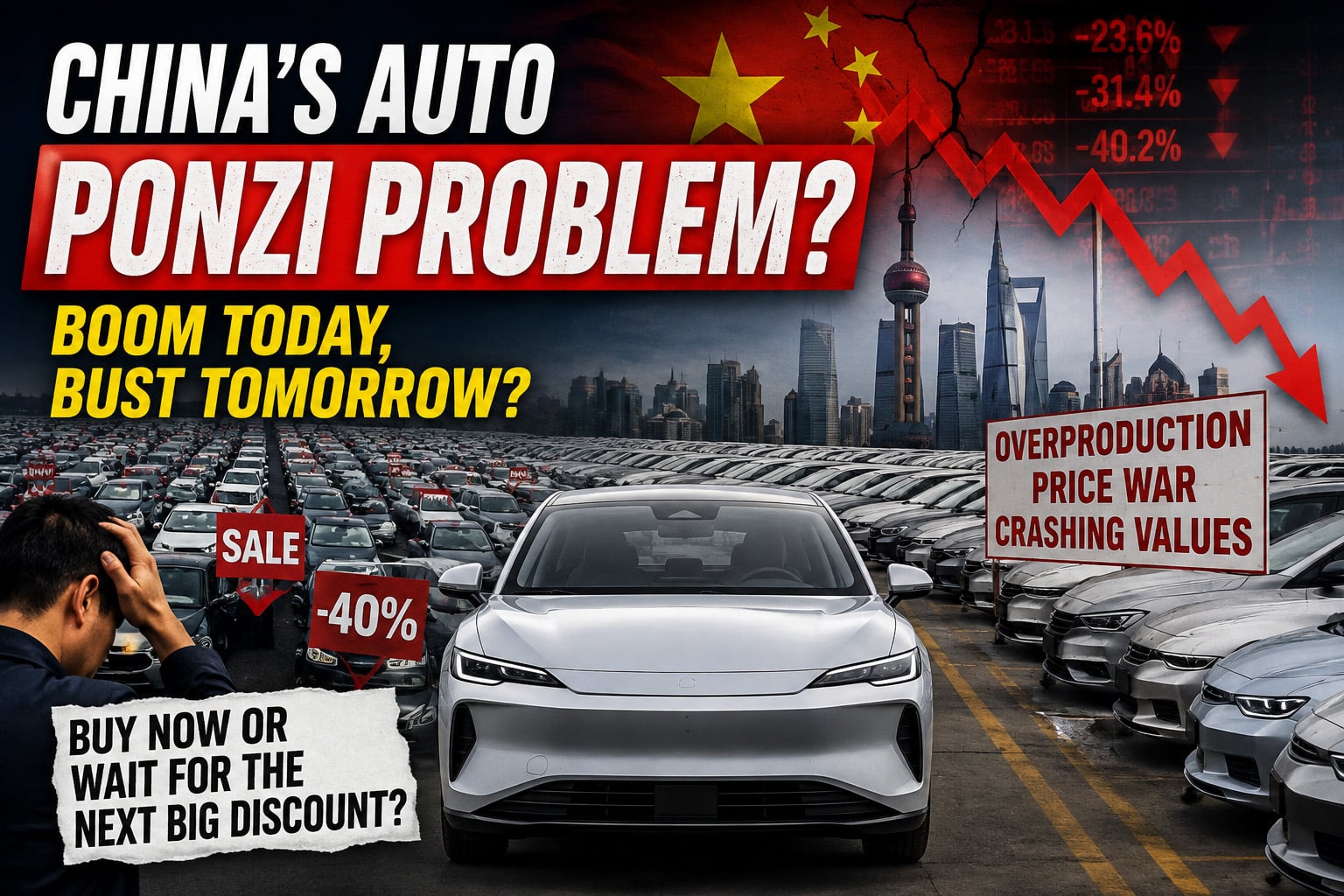
Before the lawyers reach for their keyboards, let’s be clear: I’m not suggesting China’s automotive industry is a Ponzi scheme. It isn’t. It builds real cars, employs millions of people and produces some genuinely world-class products.
But there is an uncomfortable question beginning to emerge.
Has China’s extraordinary success created a market that increasingly relies on tomorrow’s buyers to justify today’s production?
The numbers are staggering. More than 500 new models have reportedly been launched in China this year alone. Every week seems to bring another “game-changing” SUV, another electric saloon with an extra 100 kilometres of range, or another price cut that leaves yesterday’s buyers wondering why they didn’t wait another fortnight.
And that’s where the problem begins.
Car buyers aren’t stupid. If you know that the shiny new SUV you’re about to buy today is likely to be worth 30 or even 40 per cent less in twelve months’ time, not because you’ve driven it into the ground, but because three facelifted replacements and half a dozen competitors have arrived; why rush?
Why not wait?
After all, next year’s lightly used model will have the same gadgets, the same battery, the same warranty in many markets and cost thousands less.
Multiply that decision by millions of consumers and you have the makings of a vicious cycle.
Manufacturers increase production to maintain growth. Dealers discount to move inventory. Used values collapse. Consumers delay purchases because they expect even bigger discounts. Manufacturers respond by launching yet more models and offering even greater incentives.
Sound familiar?
Economists call it a deflationary spiral. The motor industry calls it Tuesday.
The irony is that Chinese manufacturers have become victims of their own astonishing efficiency. They can engineer, develop and launch vehicles faster than almost anyone else on Earth. Yet that very speed risks making every new model obsolete almost before the protective plastic has been peeled off the seats.
The consequences won’t be confined to China. As surplus stock increasingly finds its way overseas, international markets could be flooded with nearly-new vehicles offering extraordinary value. Great news for bargain hunters, perhaps, but not so wonderful for official dealers trying to sell brand-new cars at full retail price.
None of this means China’s automotive miracle is about to implode. The country remains the world’s largest car market, its manufacturers are becoming global technology leaders, and many Western brands would gladly swap places tomorrow.
However, every market has its tipping point.
If consumers become conditioned to believe that buying new is for mugs because next year’s bargain is all but guaranteed, then manufacturers face an unenviable choice: cut prices further, produce even more cars, or accept shrinking volumes.
That’s not a Ponzi scheme.
But it may be an industry trapped by its own success, a machine that has become so good at producing cars that it’s making buyers wonder whether they should ever buy a new one again.