Your Engine Is Slowly Getting Dirty: The Hidden Dangers of Engine Carbon Buildup
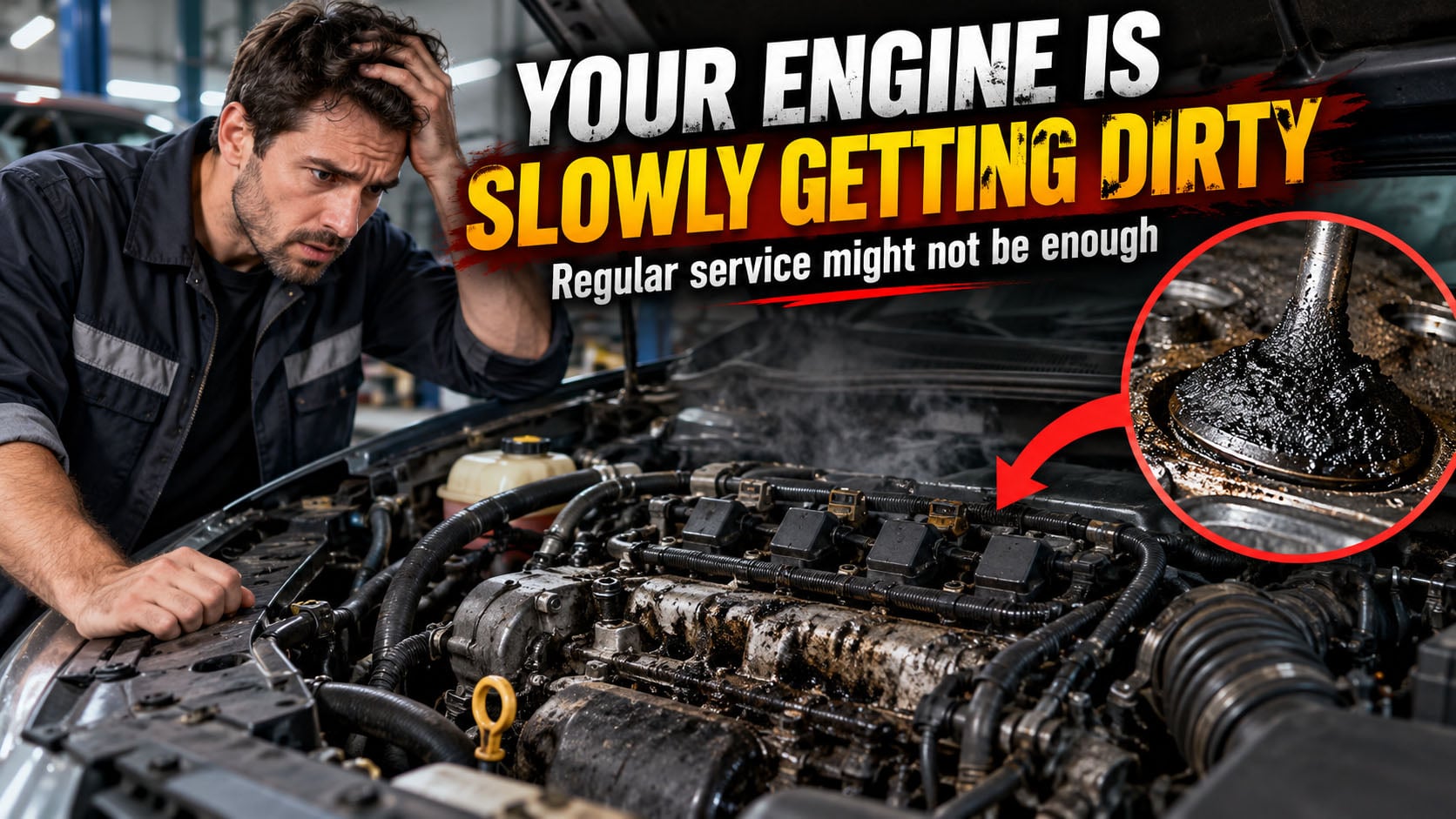
Most car owners believe regular servicing is enough to keep their vehicles in excellent condition.
- Engine oil? Changed.
- Filters? Replaced.
- Tyres? Checked.
Everything seems fine, but something may be quietly accumulating inside your engine.
Carbon deposits.
Unlike a flat tyre or dashboard warning light, carbon buildup develops gradually. By the time you notice sluggish acceleration, rough idling or increased fuel consumption, deposits may already be affecting your engine’s efficiency and traffic jams certainly aren’t helping.
Your Engine Has a Dirty Little Secret
Every time you start your car, petrol travels from the fuel tank through the fuel system before being injected into the engine and burned to produce power. For efficient combustion, fuel injectors must deliver petrol in a precise, fine spray.
Unfortunately, repeated combustion, heat and fuel-related residues can lead to deposits forming around injectors and inside combustion chambers. Think of a frying pan, even with regular cooking, stubborn residue eventually builds up.
Your engine faces something similar, except it’s cooking thousands of times every minute. Short journeys, prolonged idling and stop-start traffic can make deposit management particularly important.
What Happens When You Ignore Carbon Buildup?
A little carbon might seem harmless. After all, your car still starts, the air-conditioning works and Spotify plays perfectly. So, what’s the problem?
1. Sluggish acceleration
Deposits around fuel injectors can disrupt their spray pattern, affecting fuel atomisation and combustion efficiency. Your engine may feel less responsive when accelerating.
2. Increased fuel consumption
When fuel delivery and combustion become less efficient, fuel consumption may increase. Traffic conditions and driving habits also matter, but a dirty fuel system can contribute.
3. Rough idling and hesitation
Contaminated injectors may contribute to uneven engine operation, although spark plugs, ignition systems and sensors can produce similar symptoms.
4. Potentially expensive repairs
Severe deposits may eventually require professional injector cleaning, intake cleaning or other maintenance.
And those workshop bills are rarely anyone’s favourite surprise.
Meet PEA and PIBA: Your Engine’s Cleaning Team
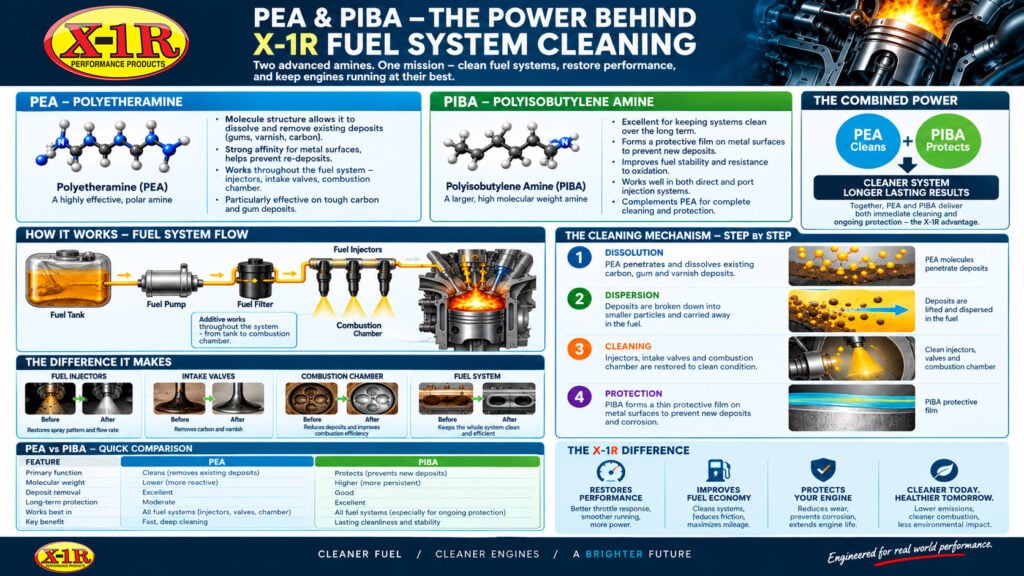
Not all fuel additives are created equal. Two important detergent technologies are PEA (Polyetheramine) and PIBA (Polyisobutylene Amine).
Don’t worry. No chemistry degree required.
- PEA: The Heavy-Duty Cleaner
PEA is an effective fuel detergent known for tackling stubborn deposits, including carbon, gum and varnish residues. Its thermal stability makes it particularly useful for combustion chamber cleaning. Simply put, PEA helps dissolve and remove accumulated deposits so they can be carried away during normal engine operation. Think of it as a powerful cleaning agent tackling burnt-on grease.
- PIBA: Cleaning and Ongoing Protection
PIBA complements PEA by providing additional fuel-system detergency and helping control new deposits. It is particularly useful for maintaining injector cleanliness, including in gasoline direct-injection (GDI) systems when appropriately formulated. Think of PEA as the heavy-duty cleaner, while PIBA provides complementary cleaning and deposit control.
Together, they address different cleaning requirements that one detergent alone may not handle as effectively.
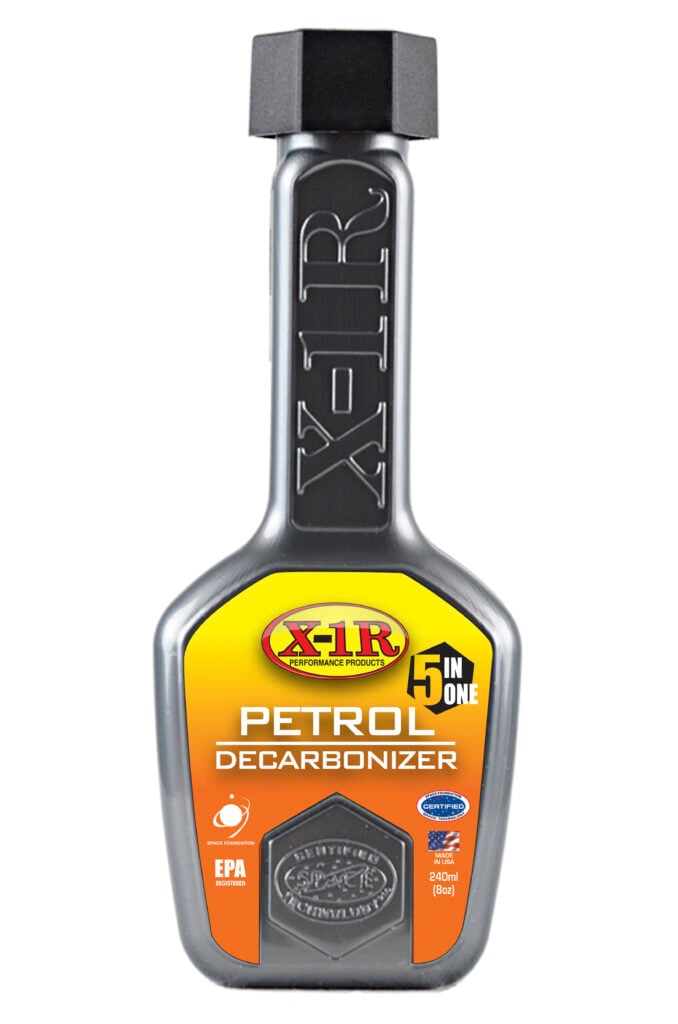
Why X-1R Petrol Decarboniser Uses Both
X-1R Petrol Decarboniser combines PEA and proprietary PIBA technology to clean and maintain the fuel system. Its updated October 2026 formulation increases both PEA and PIBA, strengthening its intended combustion chamber cleaning and GDI injector-cleaning capabilities.
The formula is designed to:
- Remove carbon, gum and varnish deposits.
- Clean fuel injectors and support proper fuel atomisation.
- Address combustion chamber deposits.
- Help control future deposit formation.
- Condition and stabilise fuel.
- Support smoother operation and efficient combustion.
Cleaner combustion may also reduce unwanted exhaust by-products, supporting the conditions under which oxygen sensors and catalytic converters operate.
However, fuel additives cannot repair damaged components. Also, because petrol bypasses the intake valves in GDI engines, stubborn intake-valve deposits may require specialised cleaning.
But My Car Is New. Do I Still Need It?
Modern petrol already contains detergents, and not every car requires additional cleaning additives. Nevertheless, vehicles frequently exposed to traffic congestion, short journeys or extended operation may benefit from appropriate preventive fuel-system maintenance.
X-1R‘s existing Petrol Decarboniser instructions specify one bottle for up to 65 litres of petrol, repeated every 5,000 kilometres or three months. Always follow the directions on your actual product packaging, particularly when updated formulations are introduced.
Importantly, fuel additives complement regular servicing. They do not replace engine oil changes, filter replacements or proper mechanical diagnostics.
Don’t Wait Until Your Engine Complains
Most motorists only start worrying when their engine loses power, idles roughly or consumes noticeably more petrol. By then, cleaning may be more complicated than preventive maintenance. No additive can make an engine immortal, but controlling deposits is one sensible way to help maintain its performance.
With its improved PEA and PIBA formulation, X-1R Petrol Decarboniser offers a convenient approach to fuel-system cleaning and deposit control.
After all, you wouldn’t wait until your teeth start falling out before brushing them.
So why wait until your engine starts complaining before taking care of what’s building up inside?