Mercedes Pulls the Plug on Germany. Has the Fatherland Finally Run Out of Juice?
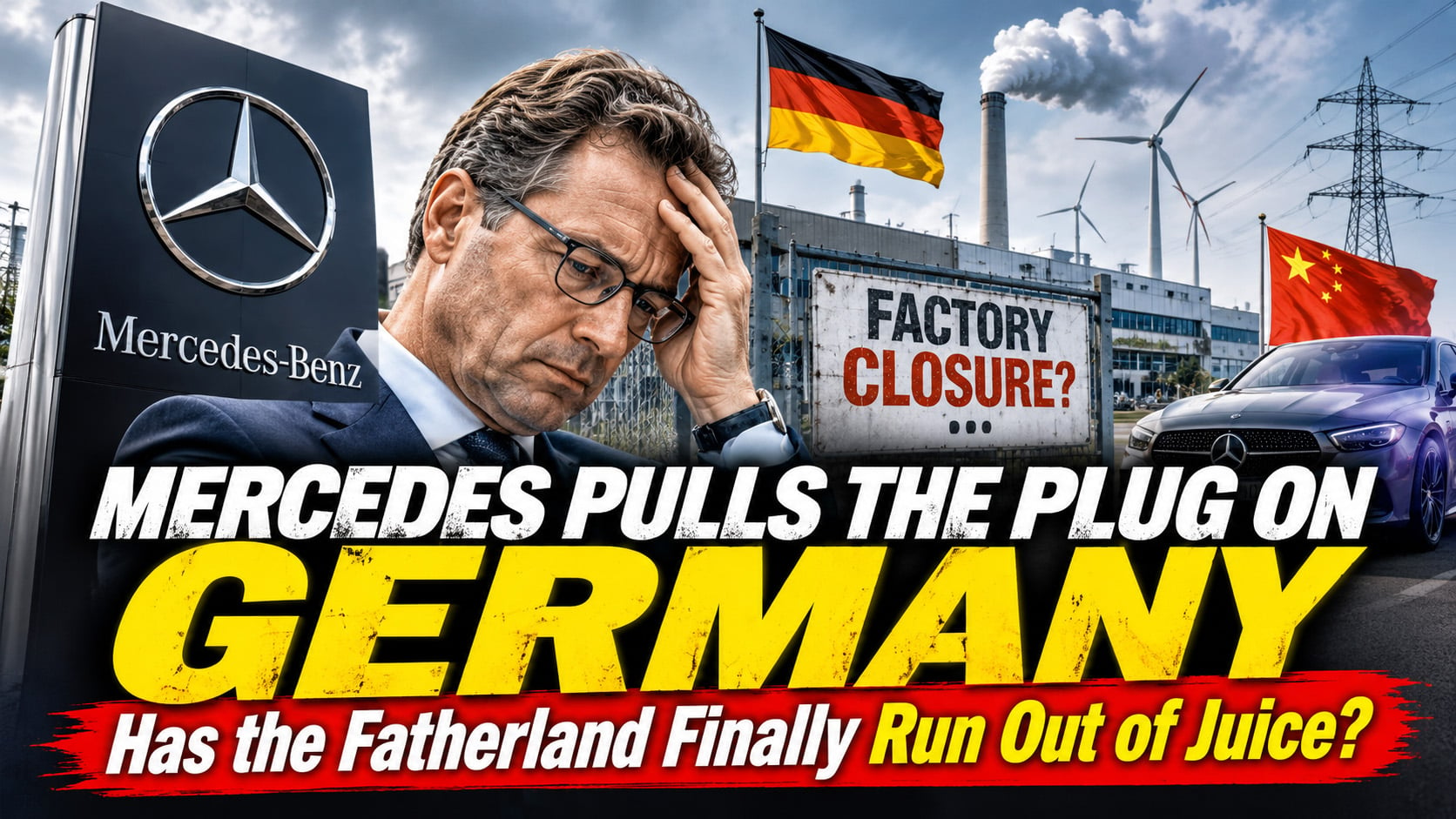
Well, here’s a turn-up for the books. Mercedes-Benz, arguably one of Germany’s greatest industrial achievements, has decided to freeze all further investment in its German factories and is now actively considering closing some of them.
Apparently, making cars in Germany has become rather expensive. Who’d have thought?
Mercedes management says labour costs are simply unsustainable, with production workers costing up to five times more than at some Eastern European facilities. Negotiations with unions have stalled, and management wants greater productivity and longer working hours.
But perhaps we should look beyond the factory gates.
Germany has spent years pursuing its Energiewende, an ambitious transition towards renewable energy, whilst simultaneously making itself increasingly dependent on an unreliable combination of wind, sunshine and expensive backup power. Add grid charges, taxes and the loss of cheap Russian gas, and suddenly manufacturing in Germany looks rather less attractive.
Then there’s China.
Mercedes has two substantial Chinese shareholders, BAIC with 9.98% and Geely founder Li Shufu with 9.69%. Coincidence? Possibly. There’s certainly no evidence they’re behind this decision, but having nearly 20% of your shareholders Chinese whilst your German factories become increasingly uncompetitive is an interesting irony.
The real villains, however, are probably closer to home. Years of expensive energy policies, inflexible labour arrangements, rising costs and a government seemingly determined to make manufacturing harder have finally caught up with German industry.
Mercedes isn’t abandoning Germany overnight, but the warning could hardly be clearer.
You can build the world’s finest automobiles, but if it costs you a fortune to manufacture them, somebody else will eventually build them cheaper.
And increasingly, that somebody is Chinese.