Why Hybrid Cars Suffer Excessive Engine Wear and Tear, and How X-1R Engine Treatment Helps
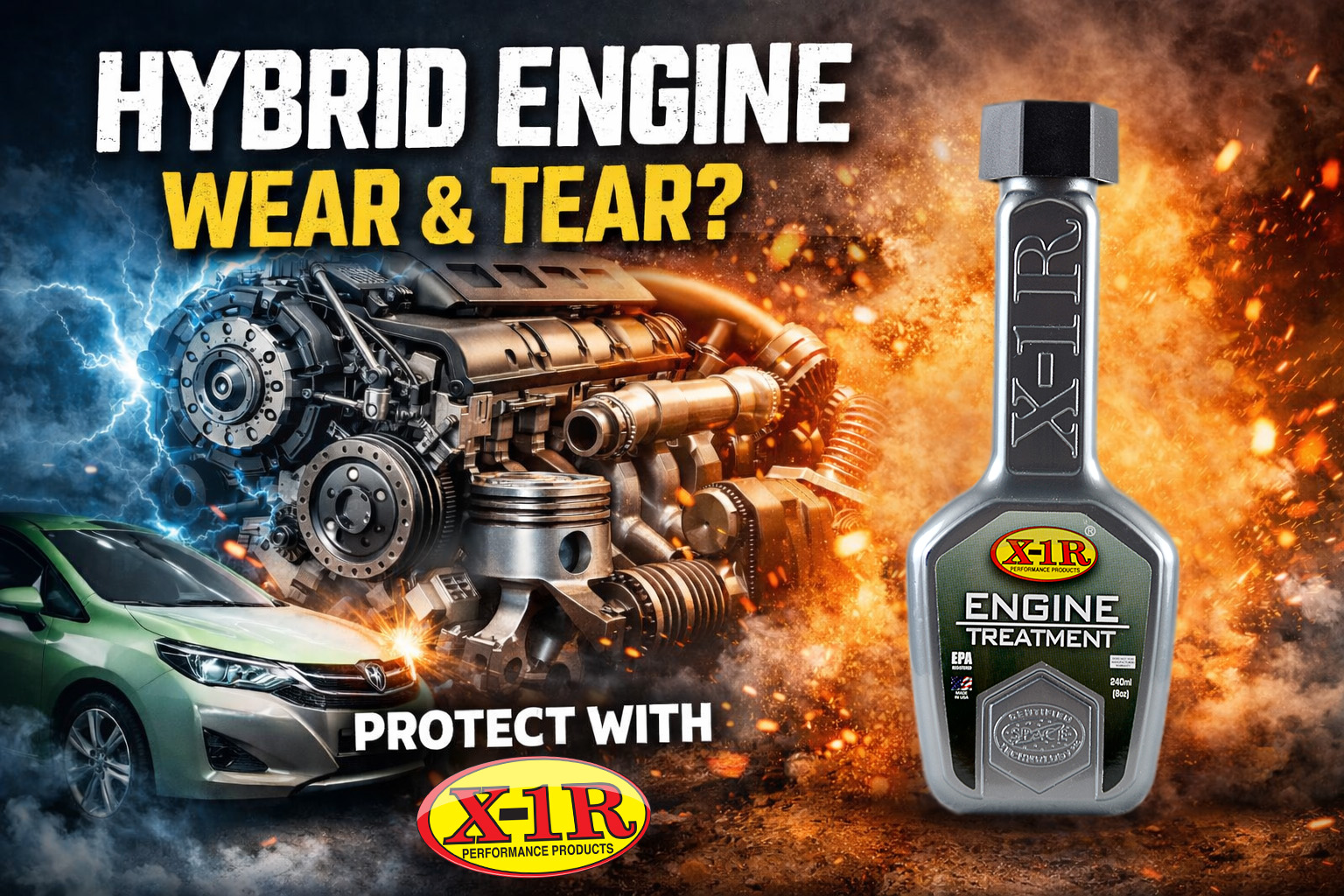

Hybrid vehicles promise lower fuel bills and cleaner driving, but many owners are surprised to discover that hybrids can suffer more mechanical wear in certain areas than conventional petrol cars. The culprit isn’t bad engineering; it’s how hybrids are designed to operate.
Frequent Engine Start-Stop Cycles
One of the biggest contributors to wear in a hybrid is the constant starting and stopping of the internal combustion engine. Every restart is a high-wear event. Oil drains away from critical components like camshafts, bearings, and cylinder walls when the engine shuts down. When it restarts, those parts briefly run with minimal lubrication, accelerating wear over time.
Cold and Partial-Temperature Operation
Hybrid engines often run cold or only partially warm. Unlike traditional cars that reach and maintain full operating temperature, hybrids may shut the engine off just as it’s warming up. Cold engines have thicker oil, poorer lubrication flow, and higher internal friction, conditions that promote scuffing and metal-to-metal contact.
Low-Load Combustion Stress
When a hybrid engine runs, it typically operates under low load. This sounds gentle, but low-load combustion is inefficient and uneven. Incomplete combustion increases soot, fuel dilution of engine oil, and acidic byproducts, all of which degrade oil quality and increase internal wear.
Regenerative Braking Side Effects
While regenerative braking reduces brake pad wear, it shifts stress elsewhere. Transitions between electric drive and engine power place repeated torsional loads on crankshafts, bearings, and timing components. Over time, this cycling contributes to fatigue wear.
Oil Degradation and Fuel Dilution
Because hybrids frequently shut down and restart, fuel can wash past piston rings and dilute the engine oil. Diluted oil loses viscosity and film strength, reducing its ability to protect against friction and wear, especially in bearings and cylinder walls.
How X-1R Engine Treatment Helps Protect Hybrid Engines
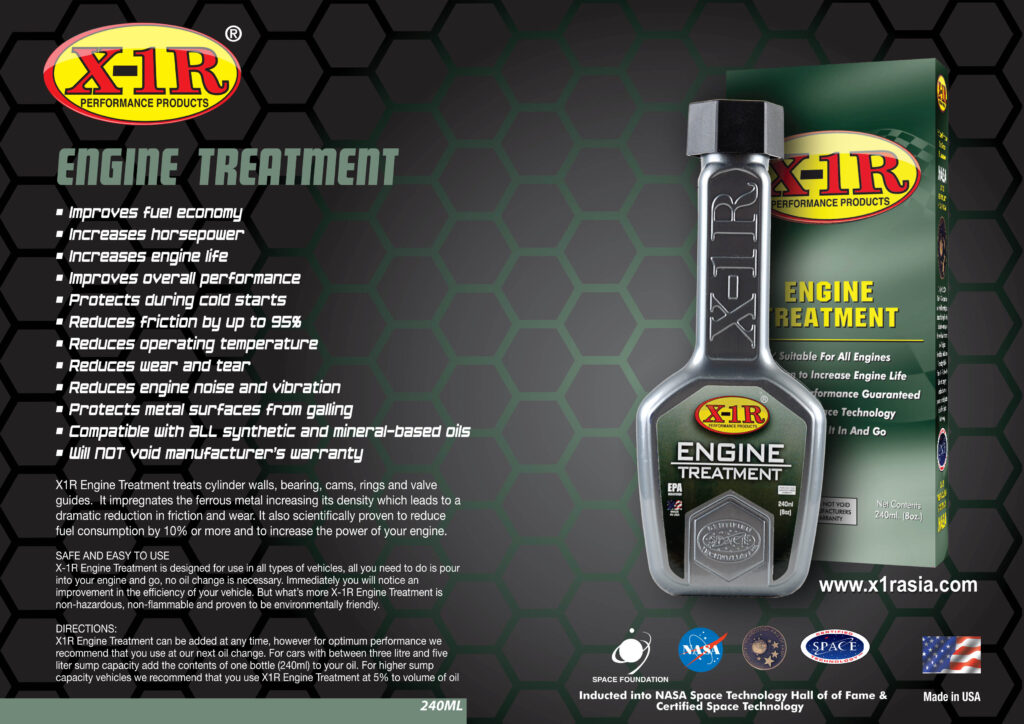
X-1R Engine Treatment is designed to address precisely these conditions. It doesn’t change oil viscosity or interfere with manufacturer specifications instead, it enhances the oil’s ability to protect metal surfaces.
Advanced Boundary Lubrication
X-1R forms a microscopic, high-strength lubricating film that bonds to metal surfaces. This film remains in place even when the engine shuts off, providing protection during the most damaging phase of operation: cold starts and restarts.
Reduced Friction and Heat
By lowering friction between moving parts, X-1R reduces heat generation inside the engine. Less heat means slower oil degradation, reduced oxidation, and improved component longevity, especially important for engines that rarely reach full operating temperature.
Improved Wear Protection Under Low Load
X-1R strengthens the oil film under light-load conditions, preventing micro-scuffing and wear that typically occur during low-stress but high-frequency hybrid operation.
Cleaner, More Stable Oil Performance
With reduced friction and better film strength, oil resists breakdown longer. This helps counter fuel dilution effects and maintains consistent lubrication between service intervals.
The Bottom Line
Hybrid cars reduce fuel use, but their stop-start nature, cold operation, and low-load running can quietly accelerate engine wear. X-1R Engine Treatment helps by maintaining protective lubrication when the engine is off, reducing friction when it’s on, and extending the working life of critical engine components, keeping hybrids running smoother, quieter, and longer.
ps they are also heavier so go through tyres and brakes faster……..