Neymar’s Cars Will Have You Regretting Your Life Decisions

What does a footballer who reportedly takes home £537,000 a week (yes, every week) spend his money on? Well, the PSG ace player is apparently a petrolhead, and when you’ve got the money to indulge in your love for cars, it leads to a drool-worthy collection. Here are just a few of the vehicles that Neymar has been spotted in.


Dubai to be Patrolled by Driverless Police Cars

Acacus Technologies, a home-grown startup in Dubai, has just been commissioned to revamp the entire Dubai Police fleet so that the streets will be patrolled by driverless cars by 2020. The company specialises in developing autonomous vehicles, and was the first to develop and launch an autonomous prototype in the UAE with a road test in 2017. The company has worked with some of the biggest clients in the world, like Etihad Airways, Dubai Taxi Corporation, and DP World (a merger between Dubai Ports International and Dubai Ports Authority).

Flying Cars, Porsche Too

You read it right. It appears that Porsche’s Sales Chief, Detlev von Platen, believes there might be a market for flying cars. According to German magazine, Automobilwoche, he said, “That would really make sense. If I drive from [the Porsche plant in] Zuffenhausen to Stuttgart airport, I need at least half an hour, if I’m lucky. Flying would take only three and a half minutes.”

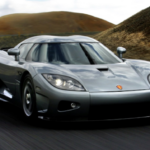
Koenigsegg Introduces Certified Legends Programme for Its Used Supercars

Even if you have loads of cash, buying a supercar isn’t necessarily easy. Money can’t rush all things. Supercar-maker Koenigsegg and other carmakers in its realm build a limited number of cars per year. The waiting period to get hold one of one of Koenigsegg’s cars can take up to four years. The Swedish carmaker makes about 16 to 20 cars any given year, but hopes to ramp it up to 25 and 30 cars.

Where Is Dyson Going To Build Its Electric Cars?

We already know that the leader of (very expensive) vaccum cleaners is working on an Electric Vehicle project, with three models already in the works. The first, a low-volume model of no more than 10,000 units, will be followed by two mass-produced models.