When the Subsidy Runs Out, Does Anyone Actually Want an EV?
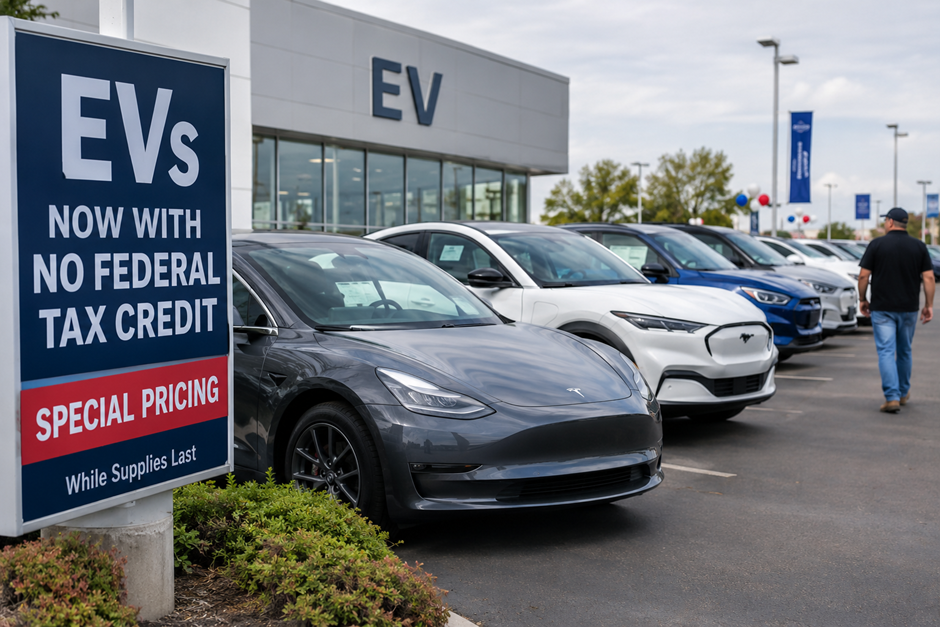
There is a rather interesting experiment taking place in America. Remove the government subsidy from electric cars and see what happens.
According to reports in Automotive News, U.S. EV sales have plunged by around 31% following the end of the federal incentives. Other recent industry data tell a similar story, with August EV sales down by roughly a third year-on-year.
Now, I’m no economist, although I have watched enough car dealers discounting nearly-new EVs to know that something is clearly going on.
The interesting question is this: if electric cars are really the wonderful, desirable future of motoring we have been promised, why does taking away the financial bribe cause people to suddenly lose interest?
Perhaps Jeremy Clarkson was onto something when he famously described electric cars as “household appliances.” And therein lies the problem.
For decades, buying a car has been about more than simply getting from A to B. Cars have represented freedom, individuality, status, performance, practicality and, occasionally, a slightly irrational desire to own something with far too much horsepower. But, nobody puts a picture of their new washing machine on Facebook.
Yet the car industry has spent billions trying to convince us that we should get excited about something that, for many buyers, is essentially a very sophisticated battery-powered appliance.
Of course, EVs have advantages. They are quiet, quick, technologically impressive and can be extremely cheap to run. But consumers don’t buy cars using spreadsheets alone. They buy them with their hearts as well as their wallets.
And when the subsidy disappears, suddenly the spreadsheet has to stand on its own. When you factor in cost of insurance, range anxiety and really bad depreciation it simply does not.
The 31% fall is possibly evidence that subsidies were doing a lot of the heavy lifting Interestingly, hybrids are benefiting from this change. Reuters recently reported that hybrids accounted for 19% of U.S. vehicle retail sales in August, while manufacturers with strong hybrid offerings are gaining customers. Maybe Akido Toyoda was right after all.
Perhaps the consumer isn’t rejecting electrification after all. Perhaps they’re simply saying: “Give me the choice.” And that, inconveniently, may be the biggest lesson of all.
If an EV needs the government to knock thousands off the price before people want one, perhaps the problem isn’t the consumer. Perhaps it’s the product.