XPENG, BERMAZ AND THE GREAT CHINESE AUTOMOTIVE MUSICAL CHAIRS
Buy a Chinese car, they said. Seven-year warranty, peace of mind, the latest technology. What could possibly go wrong?
Well, if you bought an XPeng in Malaysia, you might reasonably be asking that question this week.
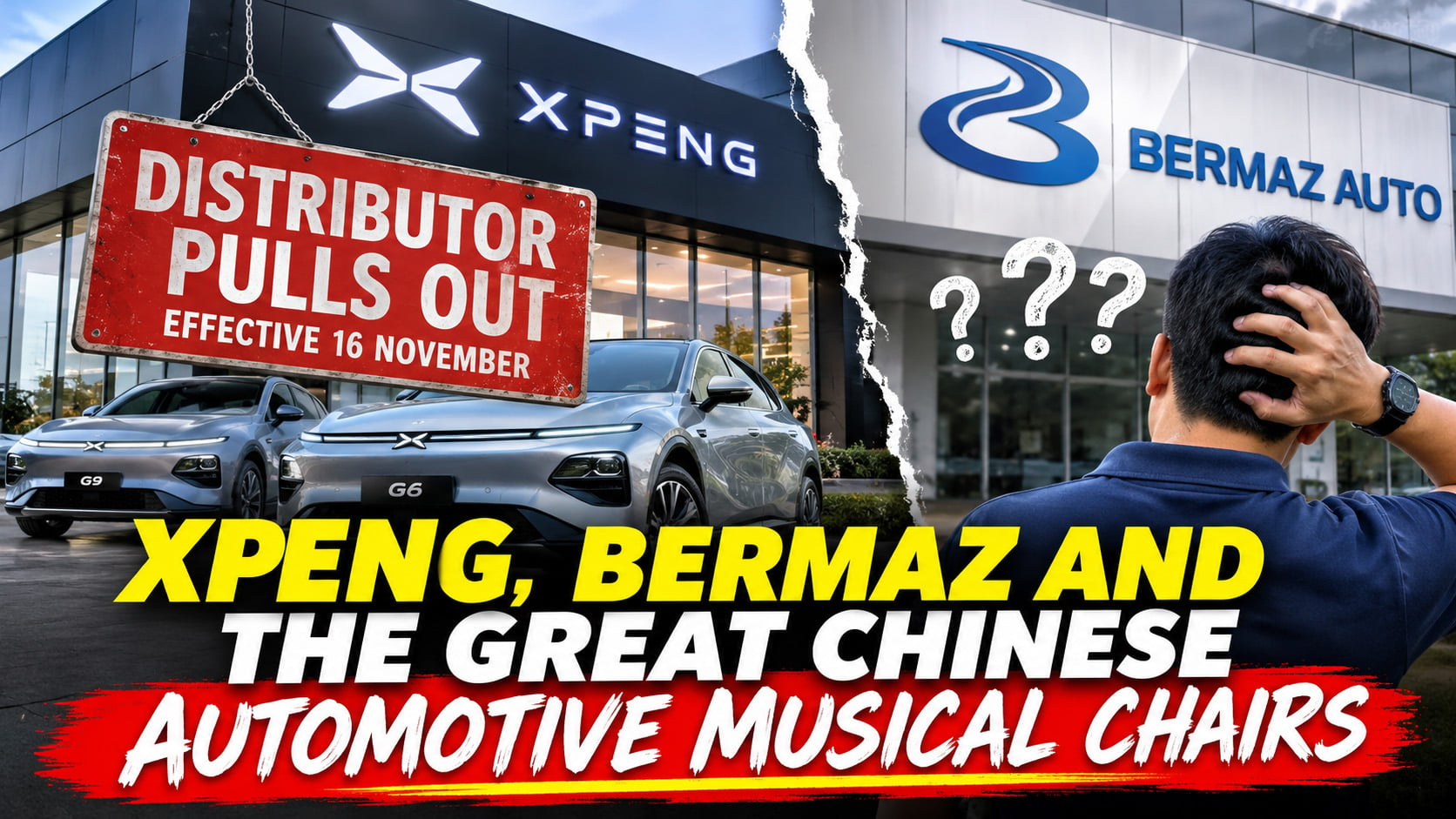
Bermaz Auto has officially pulled the plug on its XPeng distributorship, effective 16 November, after just over two years representing the Chinese electric vehicle manufacturer. The explanation? XPeng China wants to reorganise its Malaysian distribution network. Translation: the relationship is over, and the Chinese principal is taking a different approach to selling its cars here.
The timing is particularly interesting. Bermaz had only recently started assembling the G6 locally through EPMB, and was busy building the brand’s Malaysian presence. Now the distributor is out, with the contractual arrangements, including warranty claims and after-sales responsibilities, still being unwound.
And what about the owners? That’s the million-ringgit question. XPeng has some ambitious plans for its own Malaysian operation, including more service centres and battery repair facilities. But plans and functioning workshops are two rather different things. Who handles warranty claims tomorrow? Who stocks the replacement parts? Who sorts out a software fault when the showroom that sold you the car has disappeared?
The published Malaysian warranty package included five years on the vehicle and eight years on the battery and motors. Those promises don’t automatically evaporate because a distributor changes, but owners need written confirmation of who is now responsible for honouring them.
And this isn’t an isolated incident. Bermaz has also parted company with Kia, while its proposed Deepal distributorship was terminated before operations even began. Peugeot has also moved to a different distribution arrangement. Meanwhile, across Southeast Asia, Chinese manufacturers are increasingly looking to strengthen direct control over their distribution networks, rather than relying entirely on independent local partners.
There is a commercial logic to this. Chinese manufacturers want control of pricing, branding, customer data and ultimately the relationship with the buyer.
But here’s the problem. Cars aren’t smartphones. You cannot simply change your preferred retailer when something goes wrong. They need parts, trained technicians, diagnostic equipment and long-term support.
The Chinese manufacturers are discovering that selling cars is the easy bit. Keeping customers happy for the next seven years is rather harder.
And perhaps buyers should remember that the next time a spectacular warranty is used to close a sale.