China Keeps Building Cars Faster Than Porsche. For One-Third The Price. Should We Be Worried?
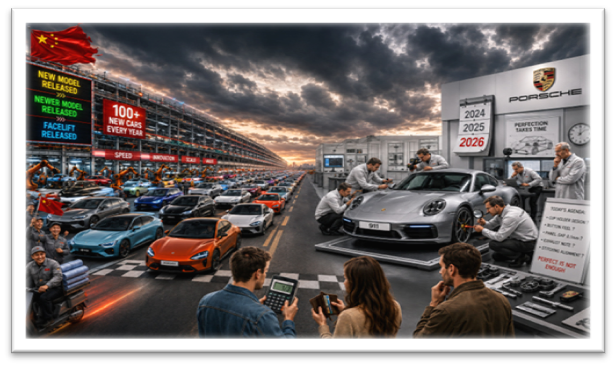
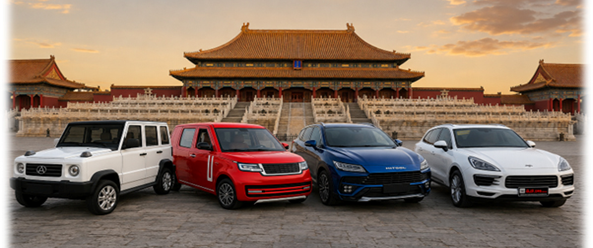
There was once a time when buying a car involved a simple process. You admired it, researched it, sold a kidney, and then bought it. Today, however, the Chinese automotive industry has looked at that process and collectively decided it takes far too long. While Porsche spends years painstakingly developing a new model, testing it around the Nürburgring, refining suspension geometry and conducting passionate internal debates about cup holder placement, somewhere in China a manufacturer has already launched three SUVs, two sedans, an electric MPV, a crossover and a vehicle that appears to be half Lamborghini and half household appliance. The most astonishing part ? They’re selling them for roughly one-third of the price.
Naturally, consumers are asking the obvious question, “How in the name of Ferdinand Porsche’s moustache are they doing this ?” The answer is simple. They’re building cars at a pace that would make a caffeine addicted squirrel nervous. While traditional manufacturers work on five to seven year development cycles, some Chinese brands seem to operate on what can only be described as the TikTok Development Programme. Monday, “Let’s build an EV.” Wednesday, “Done.” Friday, “Facelift.” The following Tuesday, “All new generation.” By Thursday, your neighbour’s car is already obsolete.
It’s genuinely impressive. One moment you’re admiring your brand new Chinese EV and the next moment the manufacturer announces a replacement with 400 kilometres more range, a larger touchscreen, a karaoke machine, facial recognition, AI powered cup holders and a digital assistant that knows more about your family than you do. Your car isn’t old. It’s prehistoric.
But the real question isn’t whether China can build cars quickly. Clearly they can. The question is whether they should. Speed is wonderful when ordering pizza. It becomes slightly more concerning when applied to a two tonne machine travelling at 110 km/h while carrying your family. Historically, car companies have moved slowly because mistakes are expensive. A software bug on your phone means you miss a text message. A software bug in your car means your dashboard suddenly informs you that you’re driving on the moon while your lane keeping assist attempts diplomatic relations with a roadside barrier.
The automotive industry has traditionally been cautious because cars are expected to survive conditions that would make military equipment nervous. They must endure potholes, floods, tropical heat, traffic jams, questionable fuel, questionable mechanics and owners who firmly believe servicing is a conspiracy invented by multinational corporations. Building a car quickly is easy. Building one that still works after ten years of Malaysian ownership is considerably harder. Ask anyone driving a twenty year old Toyota or a Proton for that matter. The thing has probably survived three owners, two floods, a family feud, a failed business venture and an unfortunate encounter with a durian tree. Yet somehow it still starts every morning.
To be fair, not all Chinese cars are bad. Far from it. Many are genuinely excellent. Some have interiors that make luxury European brands look like they were furnished by a budget office supplier. Others offer technology that makes established manufacturers appear to still be running Windows XP. The issue today isn’t quality. The issue is longevity. Nobody truly knows which of these rapidly launched brands and models will still be around in fifteen years. When Porsche launches a vehicle, there is a reasonable chance you’ll still be able to buy parts decades later. When some newer manufacturers launch a vehicle, there is also a reasonable chance the company itself may have launched three new brands, merged with another group and redesigned its logo twice before your first loan repayment is completed.
The Chinese automotive industry today feels a bit like speed dating. Exciting, fast and full of promise, but nobody is entirely sure who will still be around next year. Consumers therefore face an incredibly tempting proposition. For the price of one Porsche, you could potentially buy three Chinese EVs. Maybe four if there’s a promotion. Perhaps five if they throw in a charging cable and a lucky draw. That is undeniably attractive. However, as every seasoned car enthusiast eventually learns, the cheapest part of owning a car is buying it. The expensive part comes later through reliability, spare parts availability, dealer support and resale value, the unglamorous subjects nobody discusses during launch events with dramatic music and flashing LED screens.
So should we be worried ? Not necessarily. But we should remain cautiously curious. China’s automotive industry is unquestionably reshaping the global market. Their speed is astonishing, their innovation is remarkable and their pricing has sent shockwaves through the industry. Yet history has repeatedly shown that building a great car is not merely about making it affordable. It’s about making it survive. The true test isn’t whether a vehicle impresses journalists on launch day. It’s whether it can survive ten years of school runs, traffic jams, potholes, questionable servicing decisions and a Malaysian owner who insists every strange noise will “probably go away by itself.”
Until then, Porsche can probably continue sleeping peacefully. Because while China may be building cars faster than Porsche can design them, Porsche owners are still driving cars that were built when some of those manufacturers didn’t even exist.