How Much Do Drivers Really Trust Car Additives? The Truth Behind the Claims
Walk into any automotive shop and you will probably find shelves filled with bottles promising smoother engines, better fuel economy, reduced friction, cleaner fuel systems and even more power.
These products are commonly known as automotive additives.
But there is one question that keeps coming up among car owners: do they actually work?
And perhaps an even bigger question how much do people really trust them?
The debate is certainly not limited to one country. From Malaysia to the United States, Europe and other major automotive markets, additives have always been surrounded by a mixture of technical claims, personal experiences, mechanic recommendations and, of course, marketing.
Some drivers swear by them.
Others consider them nothing more than expensive liquid in a bottle.
So where does the truth actually sit?
Trust Is Built On More Than Just a Bottle
For most car owners, trust in an additive does not come from the packaging alone.
It usually comes from several factors: the reputation of the brand, recommendations from mechanics, personal experience, technical specifications, independent testing and whether the product has a credible history behind it.
This is understandable.
Nobody wants to pour something into a RM100,000 car or even a much older car that they have spent years maintaining — simply because the bottle claims it can “restore performance”.
The problem is that automotive additives operate in a particularly difficult area of the market.
Some claims can be tested scientifically.
Others can be difficult for an ordinary driver to verify.
For example, a driver may add a treatment to the engine and feel that the engine is quieter or smoother afterwards.
That is a real experience.
But a smoother-feeling engine alone does not automatically prove that the product has delivered a measurable reduction in friction, improved fuel economy or extended engine life.
This is where evidence becomes important.
Testimonials Are Not The Same As Test Results
One of the biggest challenges in the additive industry is separating user experience from controlled testing.
A testimonial from a driver who says, “My engine feels better after using this,” can certainly be useful.
But it is not the same as a controlled laboratory test.
There are simply too many variables involved in everyday driving.
Fuel quality, engine condition, oil viscosity, driving style, ambient temperature, maintenance history and even traffic conditions can influence how a vehicle feels and performs.
That does not mean testimonials are useless.
They can show how a product performs in real-world use.
However, when a company makes a technical claim, proper testing provides a much stronger basis for evaluating it.
This is also why consumers today are increasingly asking a simple question:
Where is the test report?
The “NASA” Factor
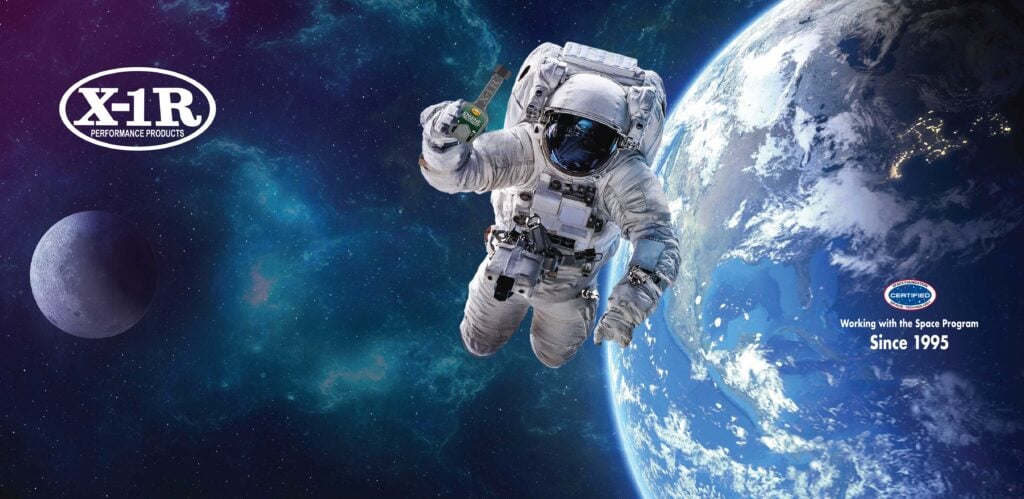
One interesting example is X-1R, a brand that has built part of its identity around lubricant and fuel-additive technology.
X-1R is not simply positioned as a generic automotive chemical product. Its technology has a documented history involving NASA and the Space Shuttle programme.
NASA records document the development of X-1R Crawler Track Lubricant in collaboration with Sun Coast Chemicals and Lockheed Martin Space Operations for the crawler-transporter used at Kennedy Space Center.
The crawler-transporter is the enormous tracked vehicle responsible for moving Space Shuttle launch hardware between the Vehicle Assembly Building and the launch area.
The lubricant underwent testing before being used in that demanding application.
NASA’s Spinoff programme subsequently documented how technologies developed for the space programme could be commercialised for wider applications, including automotive products.
That history is certainly interesting.
But there is an important distinction that consumers should understand.
A technology having a documented NASA or Space Shuttle application does not automatically mean that every current consumer product from the same brand has been tested or approved by NASA for every type of car.
Those are two very different claims.
The space programme places extraordinary demands on lubricants and machinery, but an automotive engine operates under a completely different set of conditions.
So the NASA connection should be viewed as part of the product’s technological history not as a universal guarantee of performance.
More Than Just “A Cheap Bottle”
This is also where the perception of automotive additives becomes interesting.
There is a tendency among some motorists to think of additives as cheap products that manufacturers sell to make easy money.
But the additive industry itself is considerably more technical than that.
Modern lubricants and fuels already contain carefully formulated additive packages designed to control issues such as deposits, oxidation, corrosion, wear, detergency and viscosity behaviour.
Aftermarket additives are essentially entering this same technical conversation.
Products such as engine treatments, fuel detergents, octane boosters and cetane boosters are designed for different purposes.
The question is therefore not simply:
“Do additives work?”
A better question is:
“What does this particular additive claim to do, and is there credible evidence supporting that specific claim?”
That is a much more useful way of looking at the subject.
X-1R As A Case Study
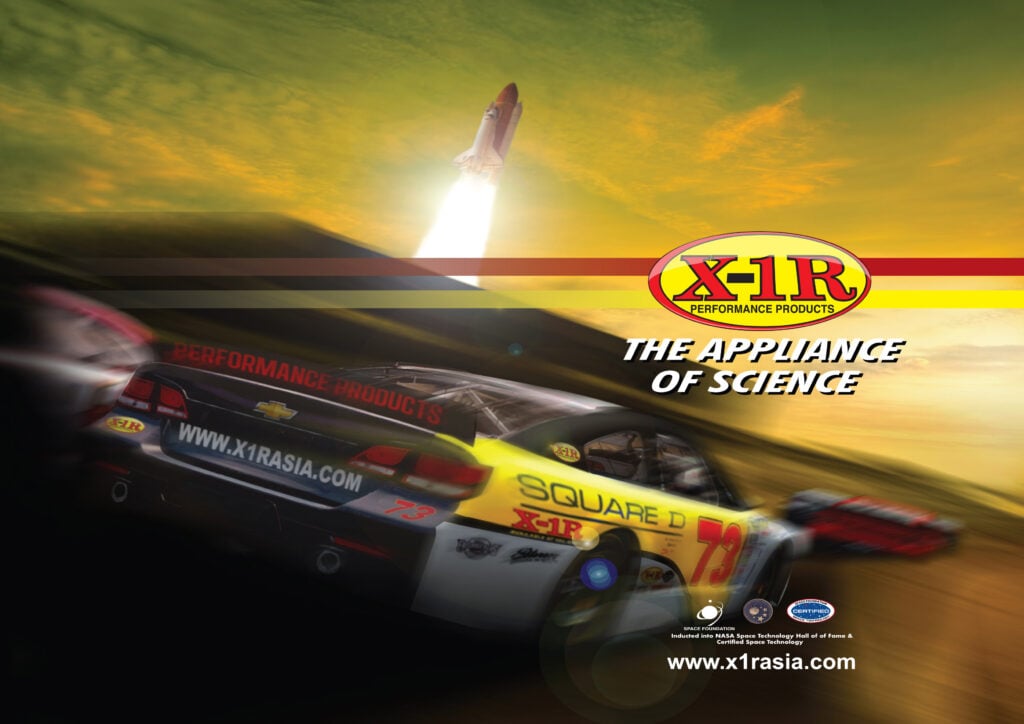
X-1R is an interesting case because the brand has a documented connection with aerospace technology while also focusing heavily on automotive lubricants and fuel additives.
Its product range includes engine treatments and fuel-related additives, with the brand positioning itself around friction reduction, lubrication and fuel-system performance.
The company’s history involving NASA-related technology gives it an unusual story compared with many aftermarket additive brands.
But again, the same rule applies.
A historical aerospace application is interesting.
A technical test report is useful.
Independent testing is even more valuable.
And real-world user experience provides another piece of the puzzle.
Ideally, consumers should look at all of these things together rather than relying on a single marketing statement.
So, How Much Do People Really Trust Additives?
There is no universal percentage that can tell us exactly how many car owners around the world trust automotive additives.
Consumer confidence varies according to market, brand, product category, vehicle age and personal experience.
Some drivers use additives regularly as part of preventive maintenance.
Others only use them when they experience a particular problem.
And some will never touch them at all.
That does not necessarily mean consumers are either “pro-additive” or “anti-additive”.
In reality, many motorists are simply evidence-conscious.
They want to know what the product does.
They want to know whether it has been properly tested.
They want to know who conducted the testing.
They want to know whether the results can be independently verified.
And most importantly, they want to know whether the product is suitable for their particular vehicle.
The Bottom Line
The automotive additive debate probably isn’t going away anytime soon.
As long as there are engines, there will be products promising to make them run better.
But perhaps the smartest approach is neither to believe every claim nor to dismiss every additive as snake oil.
Instead, look at the evidence.
A credible technical history matters.
Proper test reports matter.
Independent verification matters.
And real-world experience matters too provided we understand its limitations.
For brands such as X-1R, the documented NASA and Space Shuttle connection certainly provides an interesting technological background.
But ultimately, the question for an ordinary car owner remains much simpler:
Does the product have credible evidence supporting what it claims to do in my car?
Because when it comes to automotive additives, the most important thing is not what is printed on the bottle.
It is what the evidence says.