For years, the motor industry has been engaged in a technological arms race that nobody asked for. Screens became bigger, dashboards became emptier, and perfectly good physical buttons were ceremoniously dispatched to the scrapheap in the name of progress. Apparently, if your new car didn’t resemble a branch of Currys, you weren’t getting your money’s worth.
But did they forget why so very many of us drive? We want to be in control of the beast, we want to personally tame those wild horses. Now, rather embarrassingly, the tide appears to be turning.
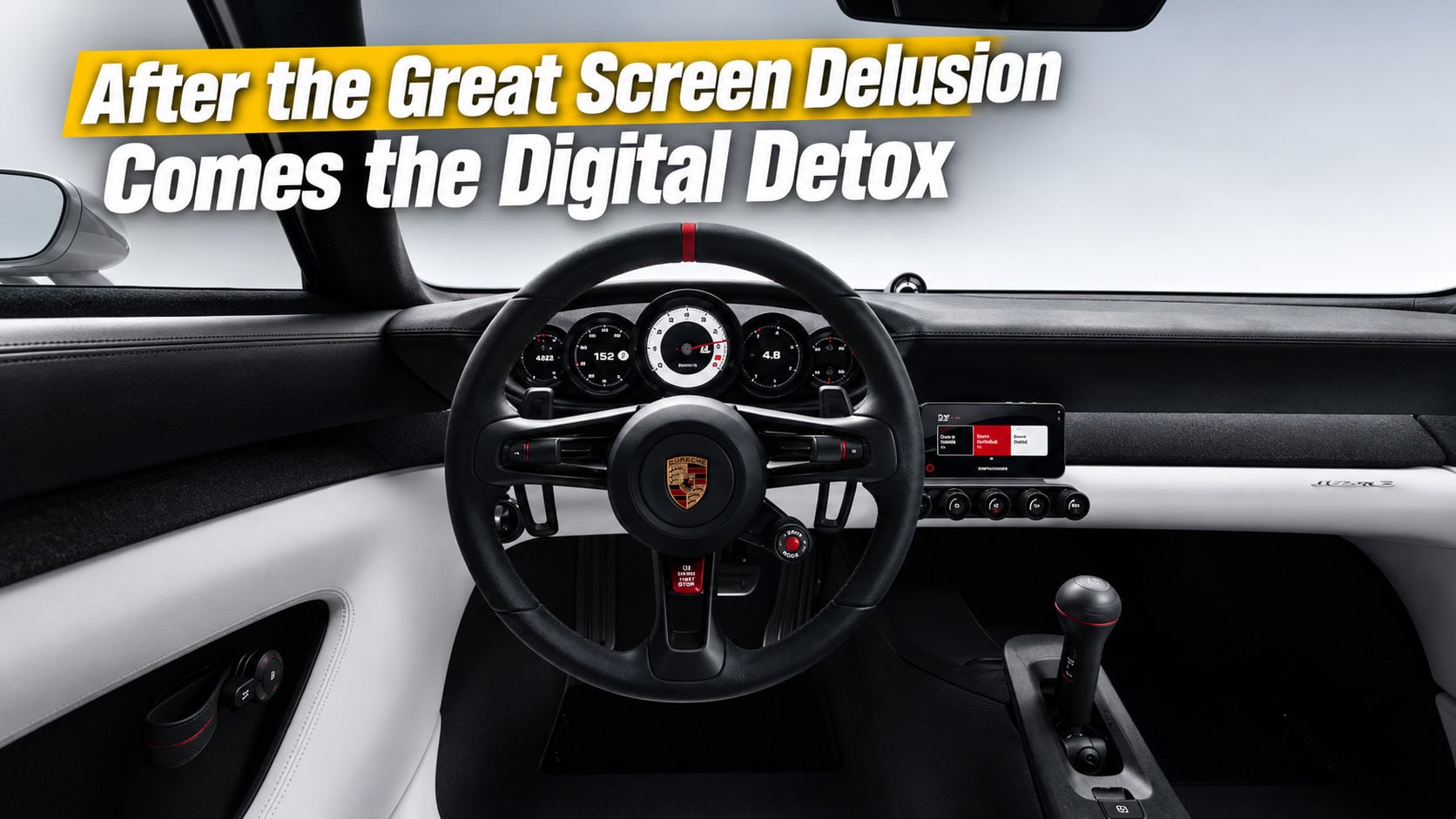
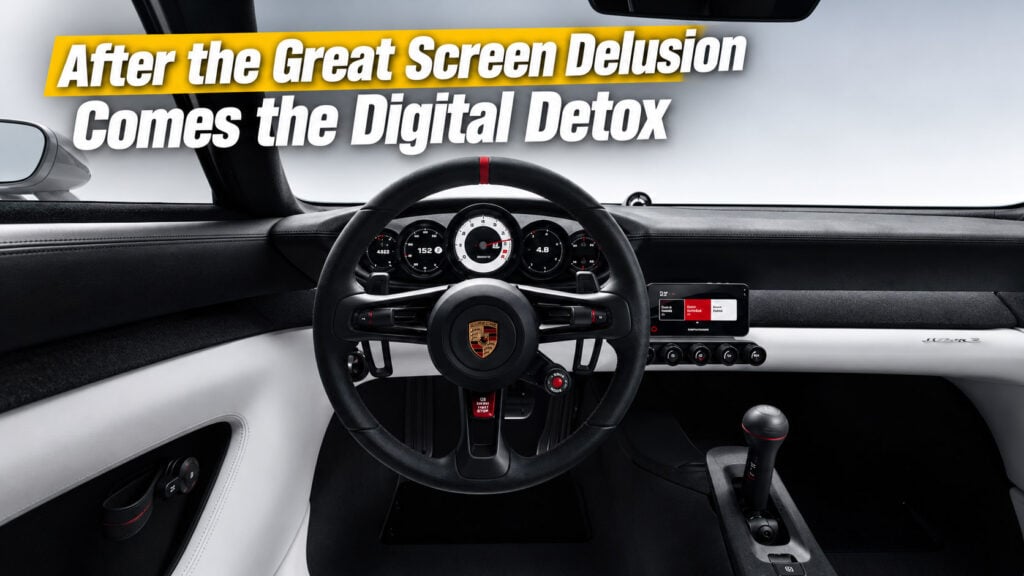
Porsche’s new Mission S concept, previewing a future flagship mid-engined supercar, dispenses with the obligatory infotainment tablet altogether. Instead, it features five circular instruments, including a proper needle sweeping across the rev counter. There isn’t even a conventional central touchscreen.
Imagine that. A dashboard designed around driving rather than demonstrating the manufacturer’s ability to buy display panels in bulk.
Porsche isn’t alone. Bugatti’s Tourbillon takes its inspiration from the craftsmanship of Swiss watches, Ferrari’s Luce attempts to combine digital technology with traditional controls, and Alfa Romeo has developed a concept in which its central screen can effectively disappear into the dashboard.
What a revolutionary idea: technology that doesn’t demand your attention when you aren’t using it.
The industry’s obsession with screens was always rather suspicious. Removing physical controls saves manufacturers money, simplifies production and makes it easier to alter functions through software. Yet customers were encouraged to believe that replacing a beautifully engineered switch with an illuminated icon was somehow an upgrade.
It wasn’t. It was cost-cutting wearing a designer suit.
Try adjusting the temperature while negotiating Kuala Lumpur traffic, and you’ll discover that locating a tiny digital icon is not necessarily an improvement over reaching instinctively for a physical dial. Worse, burying ordinary functions in touchscreen menus can force drivers to look away from the road. Apparently, we have perfected autonomous technology but still expect motorists to navigate a digital filing cabinet to demist the windscreen.
Now the supercar world is entering what Bugatti boss Mate Rimac describes as its “Swiss watch phase”. Craftsmanship, tactile controls and mechanical theatre are becoming desirable again. In other words, things that cannot be replicated simply by installing a larger screen.
Personally, I think Porsche should retain a discreet display for navigation and essential information. Purism is admirable, but balancing a smartphone on a half-million-dollar dashboard is taking things a little too far.
Nevertheless, the message is welcome. Technology should serve the driver, not the other way around. The backlash is not simply nostalgia; it is about usability, driver distraction and the absurdity of turning a dashboard into a giant smartphone.
Perhaps the next great automotive innovation will be a button that works without a software update.
Don’t laugh. At this rate, it’ll be a luxury option.