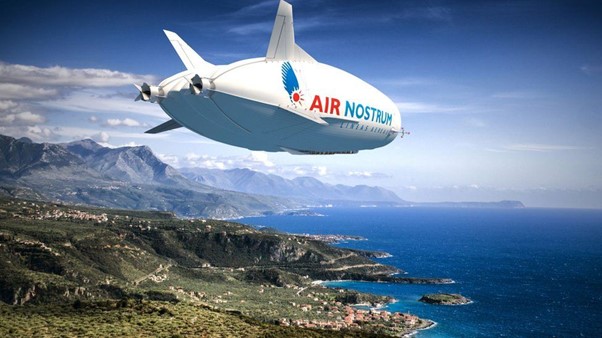
Air Nostrum, which is a regional airline in Spain heralding from the City of Valencia, is pushing at the boundaries of aviation technology. In a bid to reduce their carbon footprint, they are taking a page from the past and investing in a fleet of airships.
The company, which currently operates about 40 aircraft servicing almost 60 destinations, has reserved ten Airlander-10 Airships from the British company, Hybrid Air Vehicles (HAV). The plan is for the airships to come into service by 2026.
This is a major milestone for the Yorkshire-based company and the first large sale of their aircraft. First announced in 2016, the base model is 100 foot long, filled with helium, and can transport an estimated 100 people. HAV claims that the four diesel engines that power it will reduce emissions by 75% when compared to a conventional jet aircraft. However, when configured with electric motors, then the emissions can be reduced by up to 90%, but as of yet, the electric motors are not ready.
The Airlander-10 is not fast travelling at just 80 mph (128 kph) so the airline is banking on customers who enjoy the journey, or desire a more relaxed and civilised mode of conveyance. The aircraft generates as much as 40% of its lift from what the website describes as its aerodynamic design, with the rest of the lift coming from the buoyant helium.

How it may look inside.
With a claimed 7,408-kilometre range, the airship can stay aloft for five days at a height of 6,000 metres (about 20,000 feet). But what is also neat about the Blimp is that there is no need for a conventional airport or landing strip.
Originally, the aircraft was imagined as a surveillance vehicle for intelligence missions in Afghanistan, but as of yet, no military around the world considered this to be a viable option. HAV is not downhearted though and claims that the market for airships in the next 20 years should be worth over USD50 billion and they aim to sell 265 Airlander-10’s during that period.
So far it has not been all plain sailing for HAV. The test program saw the prototype take just six test flights, some of which did not go as planned. Back in 2016, its maiden flight lasted just 30 minutes and on its second flight, it crashed. There was also damage to the vehicle after it broke free from its mooring during a storm.
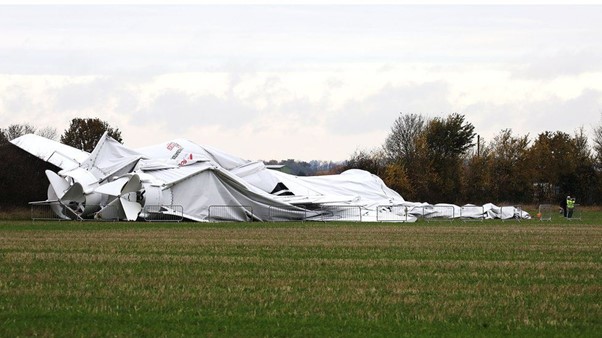
I am sure that this is one picture HAV would rather you did not see.