WHEN YOUR AXLE FALLS OFF, IT’S PROBABLY TIME TO REVIEW YOUR QUALITY CONTROL
There is an old saying in the motor industry: the customer should never be the person who discovers a manufacturing defect. Unfortunately, some recent headlines suggest that a few Chinese carmakers may have forgotten this rather important principle.
First there was the brake scandal, which first hit us in 2013 and again in 2024. Then again in 2024 we had the detachable rear axle which was given a quick engineering fix. Now, we have the latest Chery Omoda 5 saga in Malaysia. Following an incident in which the rear axle detached from a vehicle, JPJ temporarily suspended the model’s type approval while investigations proceed. Chery has announced a recall covering affected vehicles, with inspections and replacement of components where necessary. Reports indicate that potentially weak welds on the rear axle trailing arms are at the centre of the investigation.
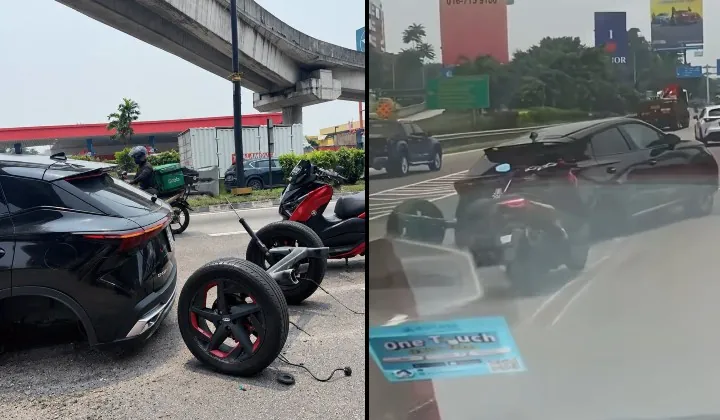
An axle falling off a car is not exactly what one expects from a modern SUV. It is, after all, supposed to remain attached while negotiating the occasional pothole, corner or speed bump. Preferably all three.
Then there is The Drive’s report of the Maextro V800, a luxury Chinese MPV developed by JAC and Huawei. During emergency braking tests, the brake pedal assemblies reportedly fractured on three separate vehicles. Three failures, three vehicles. At this point, one begins to wonder whether the testing department had been replaced by the marketing department.
So, do Chinese manufacturers have a quality-control problem?
The answer is: some clearly have questions to answer, but it is too early to condemn an entire industry.
China has become extraordinarily good at producing cars quickly, competitively and in enormous numbers. Its leading manufacturers are challenging established brands on technology, performance and price. But building cars rapidly is not the same as building them reliably.
Quality control is about more than impressive screens, clever software and acceleration figures that threaten to rearrange your internal organs. It is about weld integrity, material strength, component design and testing that exposes weaknesses before customers do.
The real question is whether the pressure to launch new models at breathtaking speed has compromised engineering discipline.
A recall, handled properly, is evidence that a manufacturer is prepared to address a problem. What matters is whether the fault is identified, the remedy works and the same mistake does not happen again.
Chinese manufacturers have proved they can build world-class cars. Now they must prove that world-class quality control comes as standard, too.
Because when the sales brochure promises cutting-edge technology, the small print should not include “axles and brake pedals may be sold separately.”