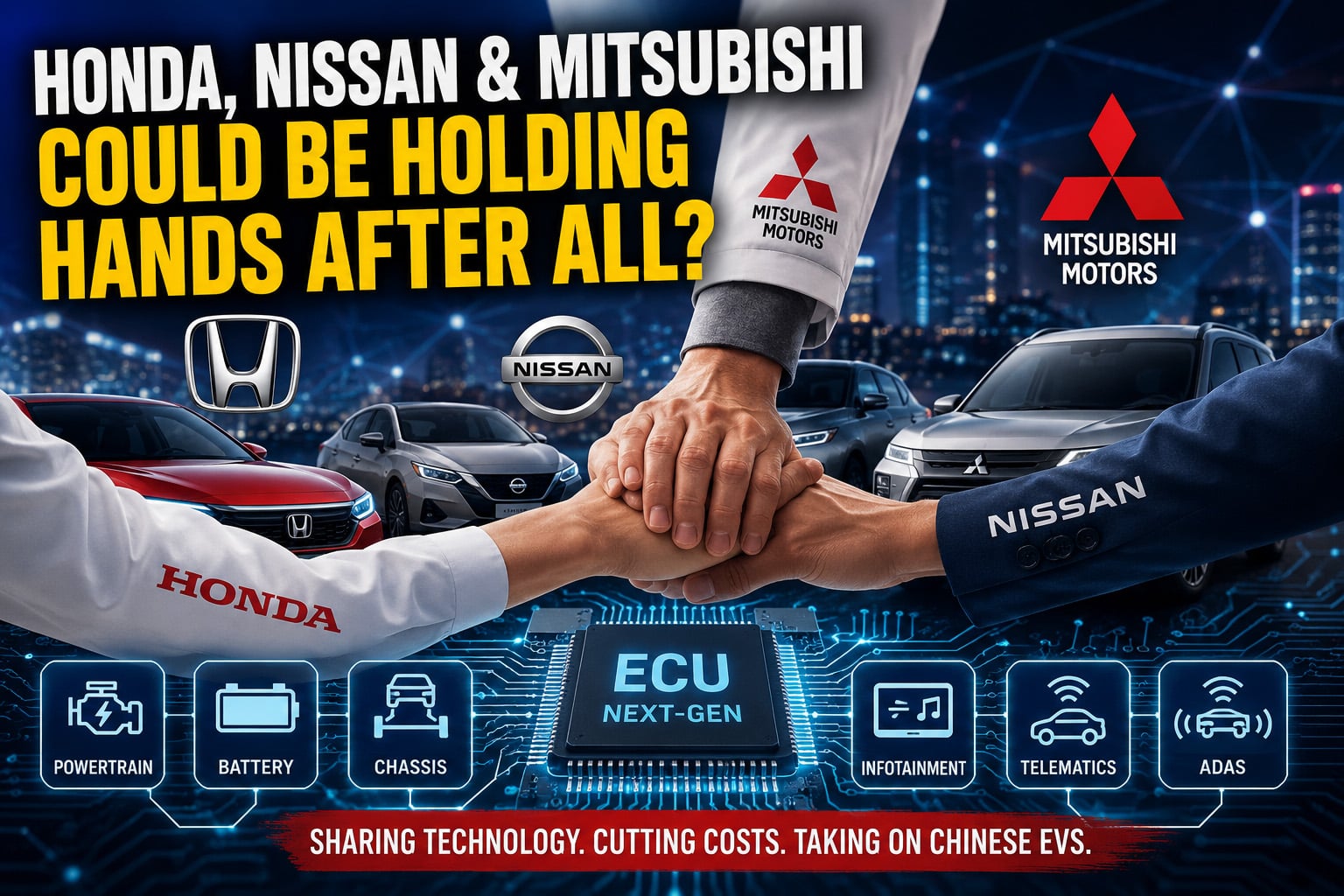
When the Honda, Nissan & Mitsubishi merger was cancelled at the beginning of 2025, the companies pledged to find ways to work together where their future cars could still end up sharing some of the same electronic brains.
The three carmakers, according to reports from Japan, are in final talks to standardise electronic control units, or ECUs, for next-generation vehicles. No formal deal has been in place as of yet but Honda CEO Toshihiro Mibe recently told shareholders that discussions with Nissan and Mitsubishi on next-generation vehicle technologies are already at an advanced stage.
Our typical modern vehicle has many ECUs, each responsible for controlling different aspects, such as the engine, brakes, telematics, transmission, batteries and infotainment. It’s unclear which ECUs will be covered by the deal, but Nikkei Asia’s sources indicate they will be used in hybrid and electric vehicles.
Mitsubishi, in which Nissan has a large minority share, is understood to be contributing to the cost of ECU development. We are still a long way from that because if the deal is signed with these few weeks, the earliest we can expect to see jointly developed ECUs in production vehicles is 2029.
As cars become more software-defined, the electronic architecture behind them matters more than ever. By standardising key ECUs, it would make it easier for these automakers to share software foundations, reduce duplication and spread development costs across a larger number of vehicles.
It is even more critical for Honda, Nissan and Mitsubishi because of the exponential growth of Chinese car brands where they have been able to develop and launch highly connected EVs and hybrids at a pace that traditional carmakers have struggled to match.