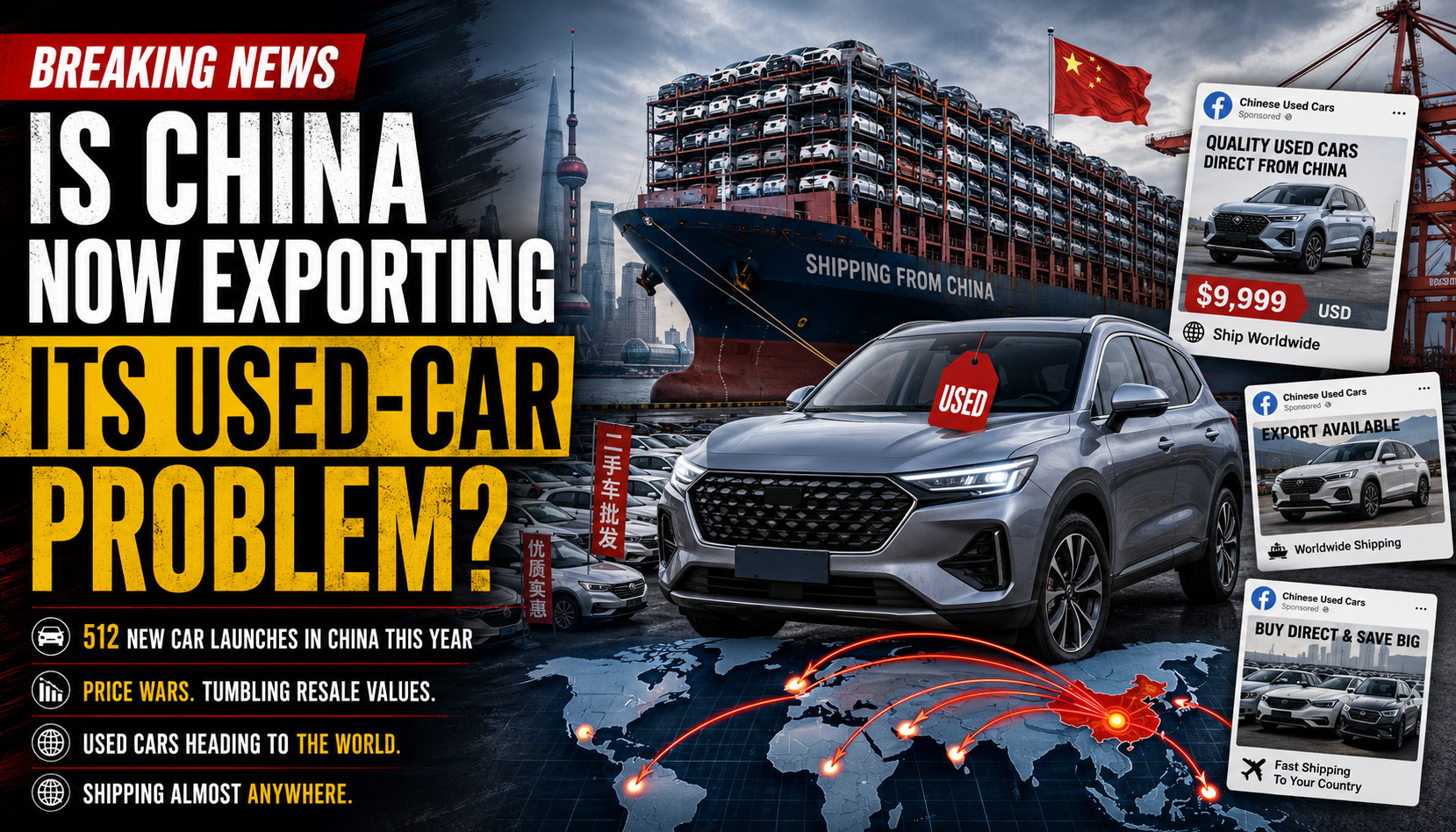
If you’ve spent any time scrolling through Facebook recently, you’ve probably noticed something rather unusual. Chinese used-car dealers are suddenly advertising directly to overseas buyers. Not importers. Not wholesalers. You.
The adverts are slick, the prices are in US dollars, and they’ll happily ship your chosen vehicle almost anywhere in the world. Five years ago that would have sounded absurd. Today it’s becoming increasingly common.
The obvious question is why?
The optimistic answer is that China has finally realised it has built a world-class automotive industry and wants to introduce international buyers to its products. That’s certainly part of the story.
The less optimistic explanation is that China has rather more cars than it knows what to do with.
This year alone, the Chinese market has seen an astonishing 512 new vehicle launches. Just take a moment to digest that. While most manufacturers elsewhere celebrate the arrival of a handful of new models each year, Chinese brands seem to unveil new cars with the regularity most of us change socks.
That relentless product cycle has consequences. Perfectly good cars become “old” in marketing terms within months, resale values tumble, and dealers find themselves sitting on forecourts full of nearly-new stock that somebody has to buy.
The answer appears to be exporting the problem.
Government policy has actively encouraged used-car exports over the past few years, while domestic price wars have made it
increasingly difficult for dealers to make money at home. Selling a two-year-old SUV to a customer in Africa, the Middle East, Eastern Europe or even South America suddenly looks like a very attractive proposition.
None of this necessarily means the cars are poor quality. In fact, many are exceptionally well equipped and represent remarkable value for money. But it does reveal something about the extraordinary pace of China’s automotive industry.
When your market launches more than five hundred new models in a single year, yesterday’s latest thing becomes today’s used bargain with astonishing speed.
Those Facebook adverts, then, aren’t simply clever marketing. They’re a window into an industry producing cars faster than its own domestic market can comfortably absorb them.
And if that trend continues, don’t be surprised if your next used car comes with shipping documents from Shanghai rather than service records from Sheffield.